Guides
How to Measure Yourself for Dresses and Jumpsuits
Measure bust, waist and hips over the fullest point with the tape level and snug but not tight, then compare with the brand's chart in centimetres. Where two sizes fit, choose by the measurement that is hardest to alter: shoulders and bust for tops, hips for trousers.
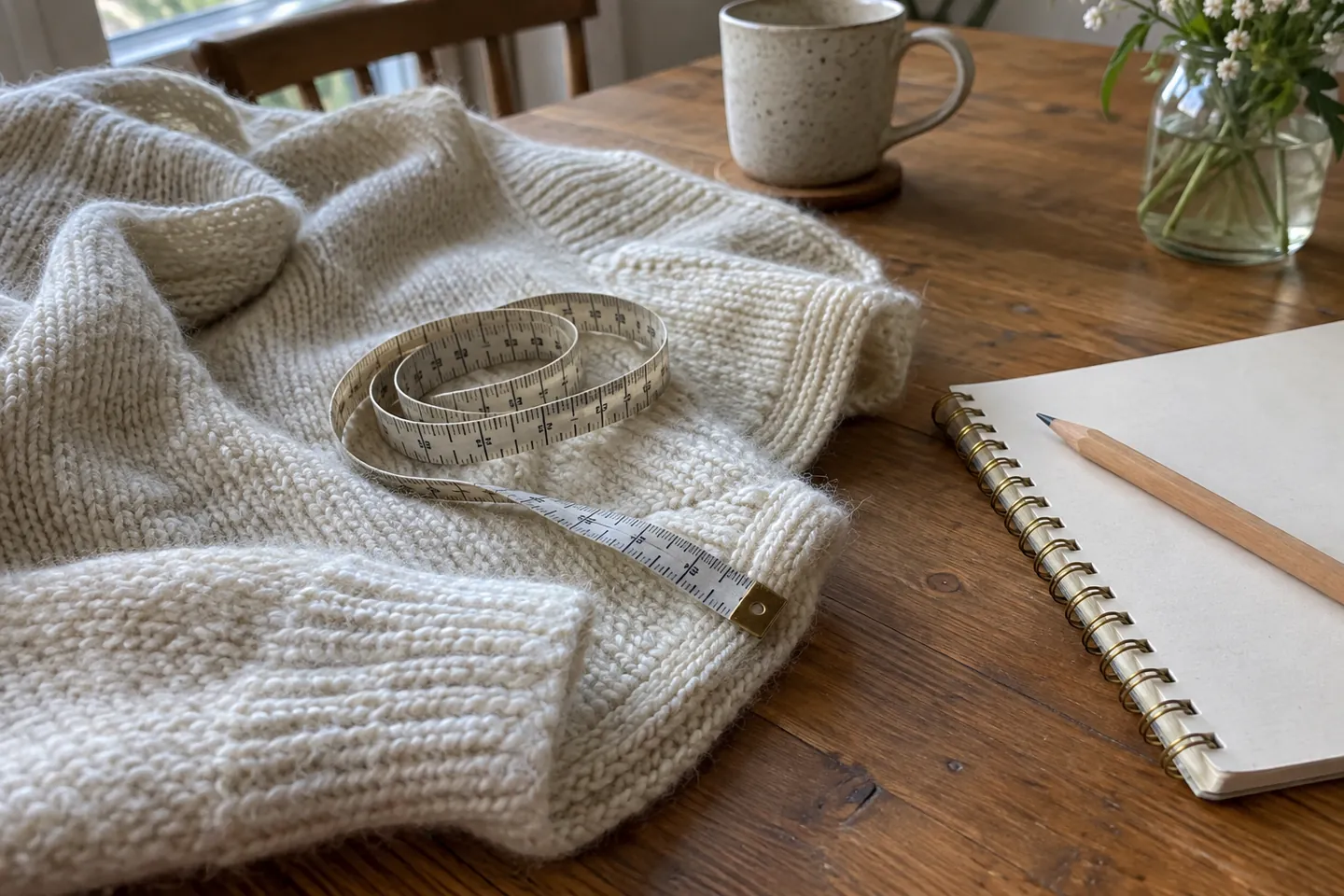
Most returns and disappointments come from sizing, not style. Two brands can label the same garment a medium and cut it three centimetres apart in the bust. The fix is not to memorise a chart. It is to take three accurate measurements, compare them with the chart of the brand you are buying from, and know which measurement to trust when two sizes seem to fit.
How to take the three measurements
Use a soft tape measure and a second person if you can. Stand in fitted underwear, relaxed, with your arms at your sides. Breathe normally and do not hold your stomach in.
- Bust. Measure around the fullest part of the chest, keeping the tape level at the back and passing over the shoulder blades. Keep the tape snug without compressing the skin.
- Waist. Measure around the narrowest part of the torso, usually just above the navel. Bend gently to the side to find the natural crease, and measure at that point.
- Hips. Measure around the fullest part of the hips and seat, usually about 20 cm below the waist. Keep the tape level all the way around.
Record each figure in centimetres. If you measure in inches, convert with 1 inch = 2.54 cm, and keep the figures to the nearest half centimetre. Measure twice and use the average if the two results differ by more than one centimetre.
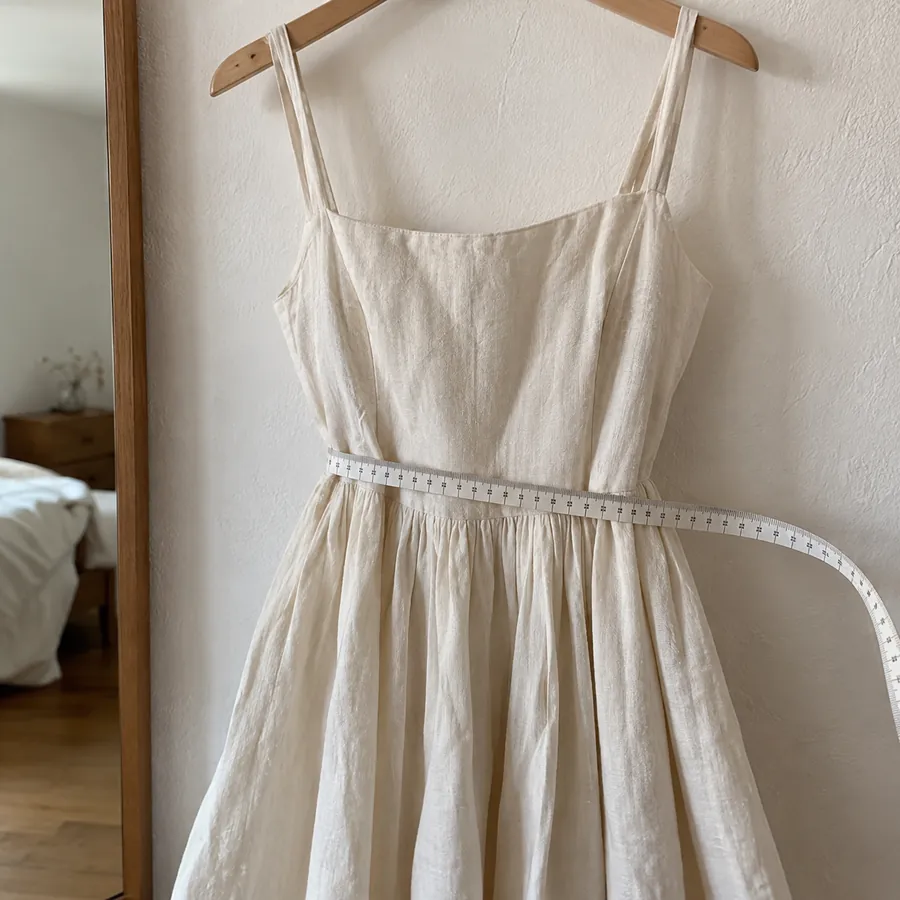
Read a brand chart correctly
A size chart lists the body measurement each size is designed to fit, not the size of the garment. Check three things: whether the chart is in centimetres or inches, whether it lists body measurements or garment measurements, and whether the size is given as a range. Some charts show the finished garment, which is larger than the body by several centimetres to allow for ease. If the chart shows garment measurements, compare with a garment you already own that fits well.
Charts also differ between dresses, jumpsuits and tops. A jumpsuit may be cut for a longer torso or a higher rise, so a size that fits in the bust may be too long in the leg. When the brand offers separate charts, use the one for the item you are buying.
Starting size calculator
Enter your three measurements in centimetres. The calculator gives a starting size on a general chart. Always compare with the brand's own chart before you buy.
Which measurement to trust when two sizes fit
Choosing between two sizes is common. The rule is to pick the size that fits the measurement that is hardest to change. A tailor can take in a waist or shorten a hem easily, but cannot add fabric to a bust or shoulders. So for a dress or top, choose the size that fits the bust and shoulders, then adjust the waist. For trousers and jumpsuits, choose the size that fits the hips and seat, then adjust the waist and leg length.
| Garment | Choose the size that fits | Easy to alter | Hard to alter |
|---|---|---|---|
| Dress | Bust and shoulders | Waist, hem length | Bust, shoulder width |
| Top or blouse | Bust and shoulders | Sleeve length, hem | Shoulders, bust |
| Trousers | Hips and seat | Waist, hem | Seat, thigh |
| Jumpsuit | Bust and hips, then check rise | Leg length, waist | Rise, seat |
Check the fit, not just the number
A size number is only a start. Check the garment for signs of a wrong fit. A dress that pulls across the bust has a bust that is too small, even if the waist is right. A shoulder seam that sits down the arm means the shoulders are too wide. A waistband that gapes at the back means the waist is too large, or the cut is not designed for your shape.
- Lift your arms: the bodice should not ride up more than a few centimetres.
- Sit down: the waist and seat should not feel tight across the stomach or the thighs.
- Check the length: a dress should sit at the knee or just below when you stand in your usual shoes.
- Look at the lines: vertical seams should fall straight, and a horizontal waistline should sit level.
Measurements change, so measure again
Measurements change with the seasons, with exercise, with sleep and with age. Measure again every six months, or before you buy a garment that is designed to fit closely. If you have changed size in one area, such as the waist, but not the bust, keep the bust size as your starting point and adjust the rest.
Frequently asked questions
Should I measure over a bra?
Measure bust over the bra you plan to wear with the garment, because the bra changes the shape. For a structured dress, measure over a fitted bra with the same cup you use most often.
Do different brands use the same size chart?
No. Two brands can use the same size label for different body measurements. Always compare your figures with the chart of the brand you are buying from.
What if I am between two sizes?
Choose the size that fits the bust or hips, then check whether the other measurements can be altered by a tailor. If you are unsure, read the reviews for fit notes, but treat them as a guide only.
Can I use a dress size chart for a jumpsuit?
Only as a rough guide. Jumpsuits have a rise and a seat that dresses do not, so check the jumpsuit chart and the rise measurement before you buy.
Measurement method follows standard dressmaking practice. The calculator uses general ranges and is not a substitute for a brand's own chart.
Keep reading
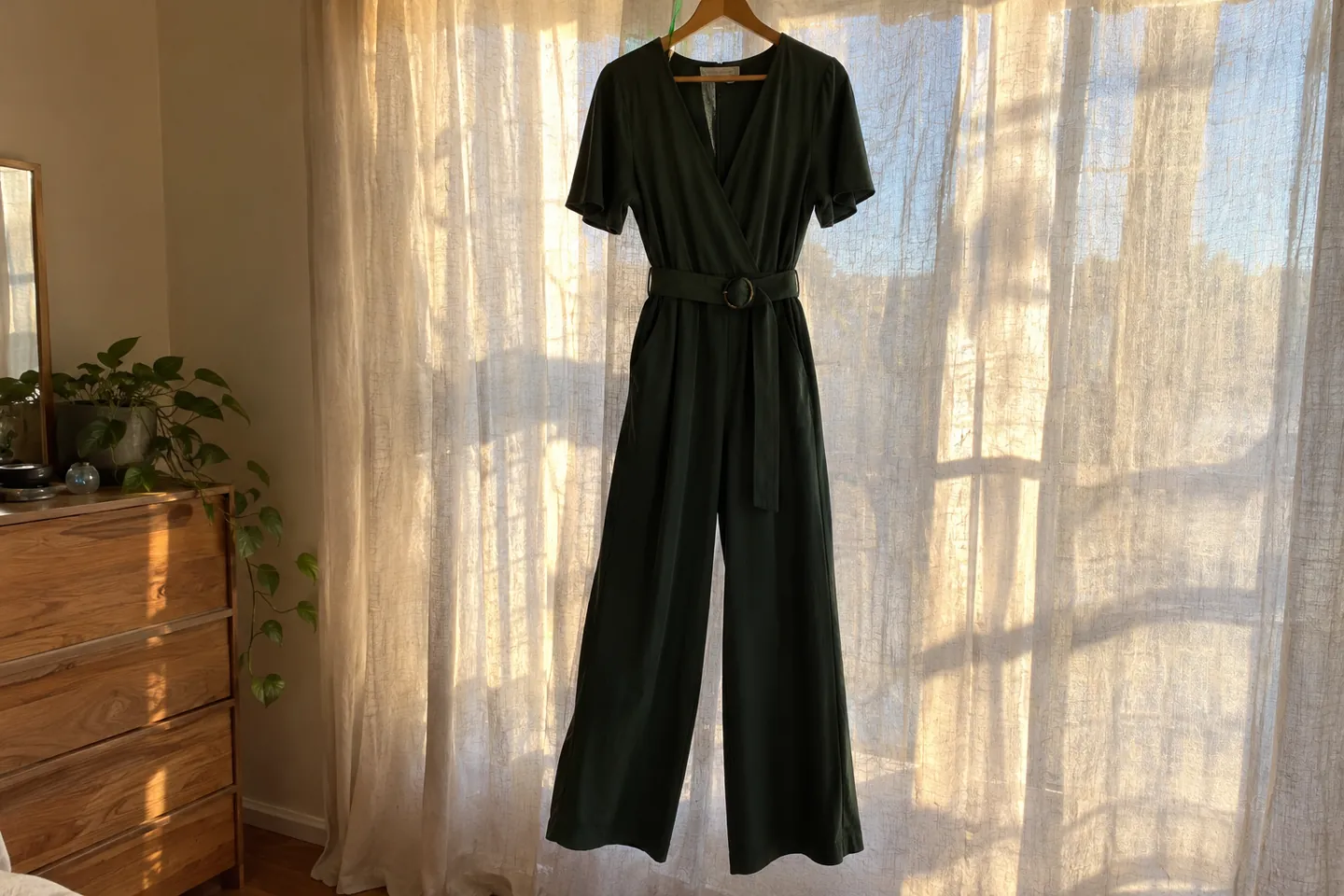 Jumpsuits
 That Fit: How to Choose Rise, Leg Width and Fabric
How to pick a jumpsuit that fits: rise, leg width, fabric drape and waist. Includes a fit checker that suggests the cut for your proportions.
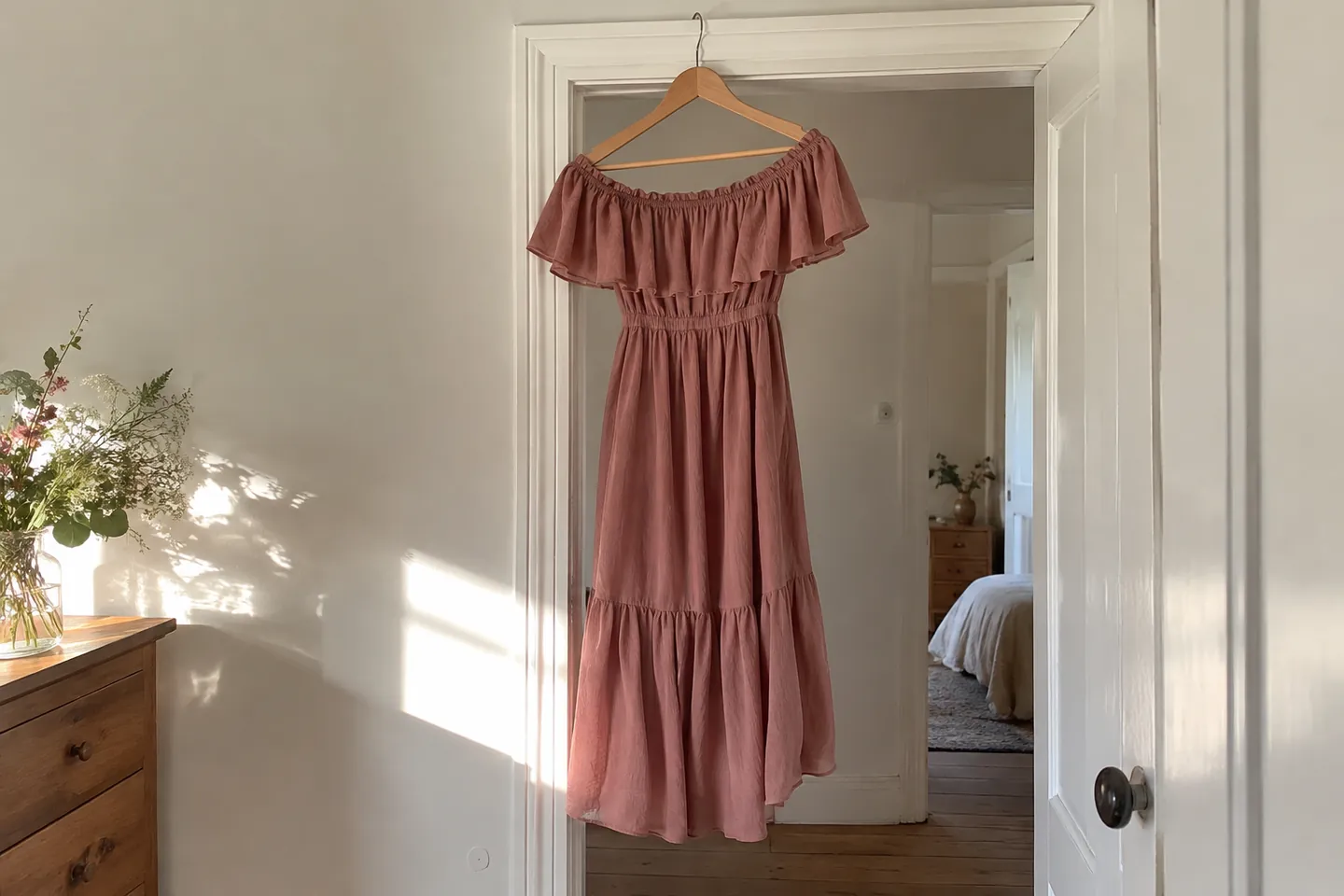 Dresses
Bardot Dresses: Choosing the Neckline, Fit and Occasion
Bardot dresses explained: how the off-shoulder neckline fits, which bodices suit which occasions, and a side-by-side comparison of neckline types.
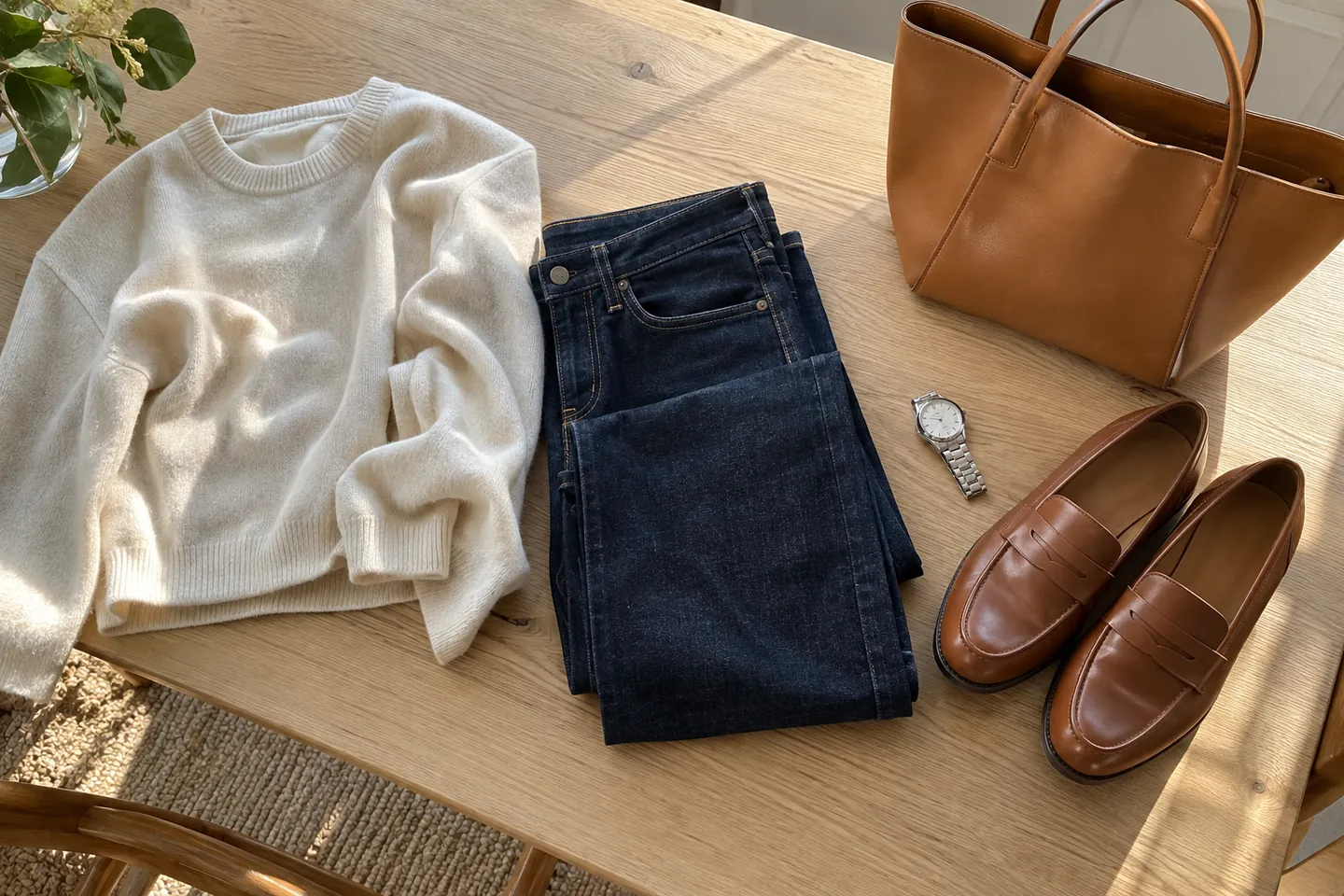 Daywear
 Capsule: Nine Pieces That Work From Desk to Dinner
Build a daywear capsule of nine pieces that mix into dozens of outfits. Includes a capsule checklist that counts your possible outfits.