Guides
Kick pleat vs slit: what your dress opening actually does
A kick pleat contains folded fabric behind a seam opening, while a simple slit has separate finished edges. Makers also use vent and split in different ways. Inspect the actual backing, then check ordinary steps and sitting with your intended layers. The name alone cannot guarantee movement or coverage.
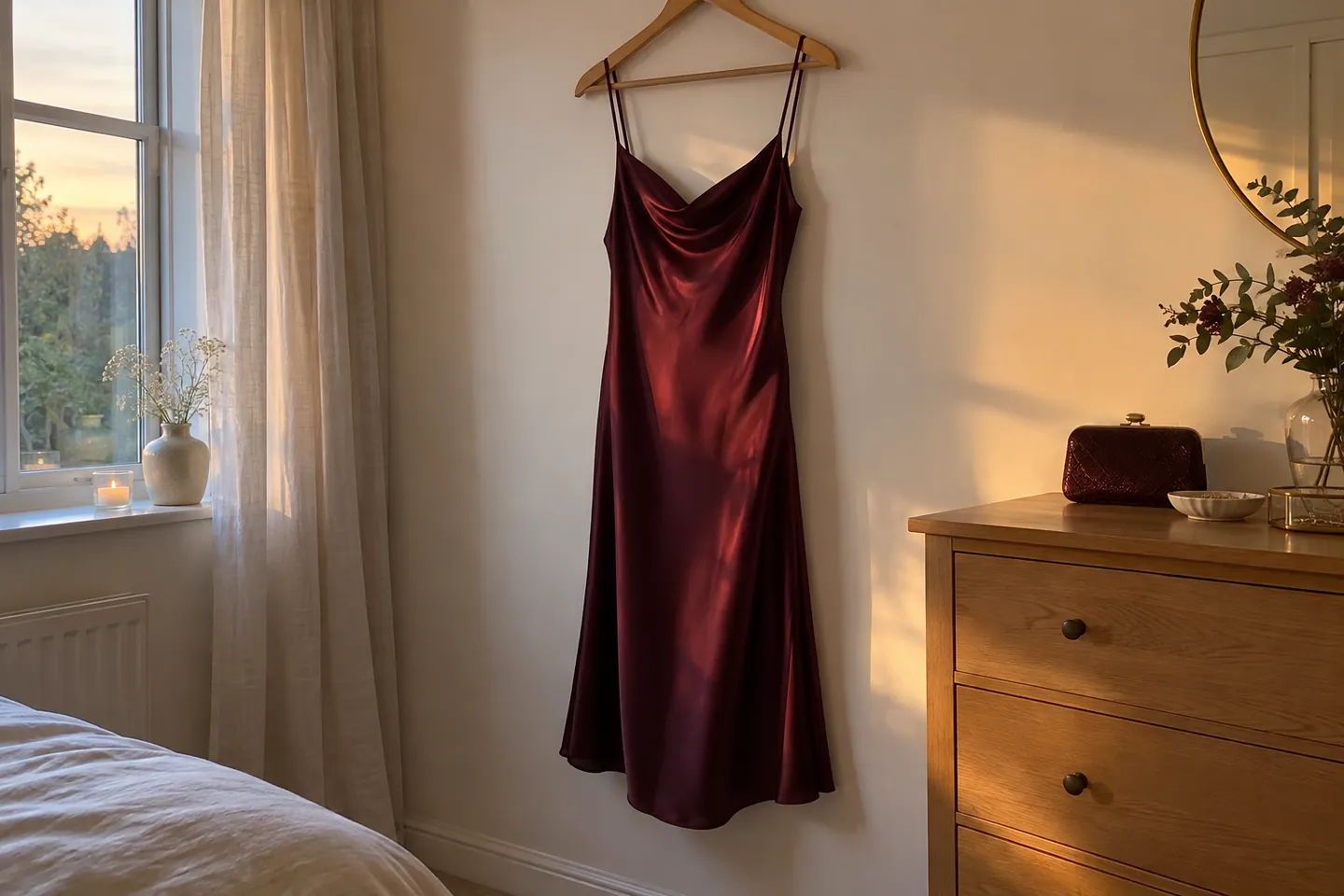
A narrow dress can need an opening at the hem for ordinary movement. The label tells only part of the story: a slit, an overlapping vent and a backed kick pleat can be described differently by different makers. Look at the construction, then assess what the actual dress does when worn.
| Detail to look for | What it tells you | What it cannot promise |
|---|---|---|
| Separate finished edges | An opening without a continuous fabric backing | A particular level of coverage while moving |
| Overlapping extensions | One edge lies over another | That the overlap stays closed in every position |
| Folded backing | Extra fabric can unfold behind the seam opening | Enough room for every wearer or activity |
What is the difference between a slit and a kick pleat?
A slit is an opening in the garment; a kick pleat adds folded fabric behind or within a seam opening. That backing can provide room as it unfolds. This distinction is useful, but shop labels do not form a universal construction standard.
In Pamela Leggett's Threads tutorial, a kick pleat has a fold or seam extensions forming a backing; an opening without that backing is called a vent. Sew Over It uses kick pleat, vent and split together for its pencil-skirt tutorial. Ask what the dress contains rather than arguing from the product name.
Which detail can you identify?
I can see two separate finished edges
Record an unbacked opening and its position. Check the view while standing, taking normal steps and sitting; the name alone does not establish coverage.
I can see overlap or a folded backing
Describe which layers overlap and whether extra cloth unfolds behind them. Assess the actual movement without forcing the folds.
The listing shows only the outside
Ask for an inside photograph and a description of the backing and lining. Keep construction unknown until the seller answers.
How do you check an opening before an event?
Try the intended underlayers and shoes, then take normal steps and sit normally. Note where the opening separates, whether the lining restricts movement and whether the top of the opening pulls. Stop rather than forcing a step against tension.
The Sewing & Craft Alliance's skirt-slit guideline identifies the upper opening as a stress point during walking and sitting. Its instructions also account for a slip. That supports checking the layers together; it does not supply a universal safe slit length or prescribe what anyone should reveal.
For a party outfit, the dress cut and fabric guide covers the wider choice. For a wedding, read the actual invitation and the venue-planning guide. A detail that moves comfortably can still differ from your own coverage preference or an explicit event requirement.
Does hem length tell you how high the opening sits?
The bottom hem and the top of an opening are different landmarks. A long dress can have a high slit; a shorter dress can contain a backed pleat. Record both points if they affect your decision.
Use the skirt-length measurement method for the waist-to-hem route. Ask the seller separately where the opening begins and which edge they measured. A flat photograph does not show the opening throughout movement, and a size label cannot resolve that missing information.
Can a tailor change the opening?
A proposed alteration depends on the actual seam allowances, backing, lining and fabric. Do not assume that closing a slit preserves the room needed to walk, or that a folded backing can be added without suitable cloth.
Bring the whole dress and the intended underlayers to the assessment. Describe the position or movement that concerns you and request a garment-specific proposal and timing. Keep an outfit already ready to wear if the work is uncertain. The dress measurement guide helps record other dimensions without treating them as a diagnosis.
Choose the next useful check
Movement is comfortable; I dislike the exposure
Describe that preference separately from fit. Compare another design or ask a fitter about the particular construction before expecting an alteration.
The opening or lining pulls
Stop the forced movement and arrange an assessment of the complete garment. A different size or cut may be an option; the pulling alone does not prove its cause.
The event is near and the work is unconfirmed
Use a ready-to-wear fallback while you obtain a concrete proposal. Do not base the event plan on a presumed repair or delivery date.
Questions about dress slits and kick pleats
What does a kick pleat look like?
Look for folded fabric behind or within the opening. It may look like a closed seam at rest and unfold during movement. Ask for an inside photograph if the outside view is unclear.
Is a vent always different from a kick pleat?
Terminology varies between makers and tutorials. Describe the overlap and backing that actually exist; a product label alone does not settle the construction.
Does a kick pleat guarantee more coverage?
A backing can cover an opening, but coverage still changes with the cut, fabric and movement. Try the actual garment and intended layers rather than relying on its name.
Can I sew a dress slit closed?
Ask a fitter to assess the available movement first. Closing an opening can remove room used for walking or sitting; a seam change needs a garment-specific plan.
Should I cut a stitch across the opening?
Identify it first. Temporary holding stitches and permanent construction are different. Ask the maker or a fitter before cutting an unfamiliar stitch.
Is there one correct opening height?
No single height decides fit or coverage for every dress and wearer. Check the actual movement, your preference and any explicit event requirement.
Keep reading
PartyParty Dresses: How to Pick the Right Cut, Length and Fabric
Choose a party dress by occasion, cut, length and fabric. A practical guide with an interactive finder and fit notes for evenings out.
 Guides
Wedding Guest Outfits for Daytime, Evening and Garden Weddings
What to wear to a wedding as a guest: outfits by time of day, venue and season, with a checker that lists what to confirm before you shop.
 Guides
How to Measure Skirt Length From Waist to Hem
Measure a skirt from waistband to hem, record the front and back separately, and compare a listing without confusing body and garment lengths.