Guides
Dress facing flipping out: check the neckline finish
If a dress facing flips outside the neckline, first identify the inner piece and record where it rolls over the edge. Understitching can help hold seam allowance toward a facing during construction, but a finished dress needs its own assessment. Keep fit, movement, damage and other small attachments separate before changing anything.
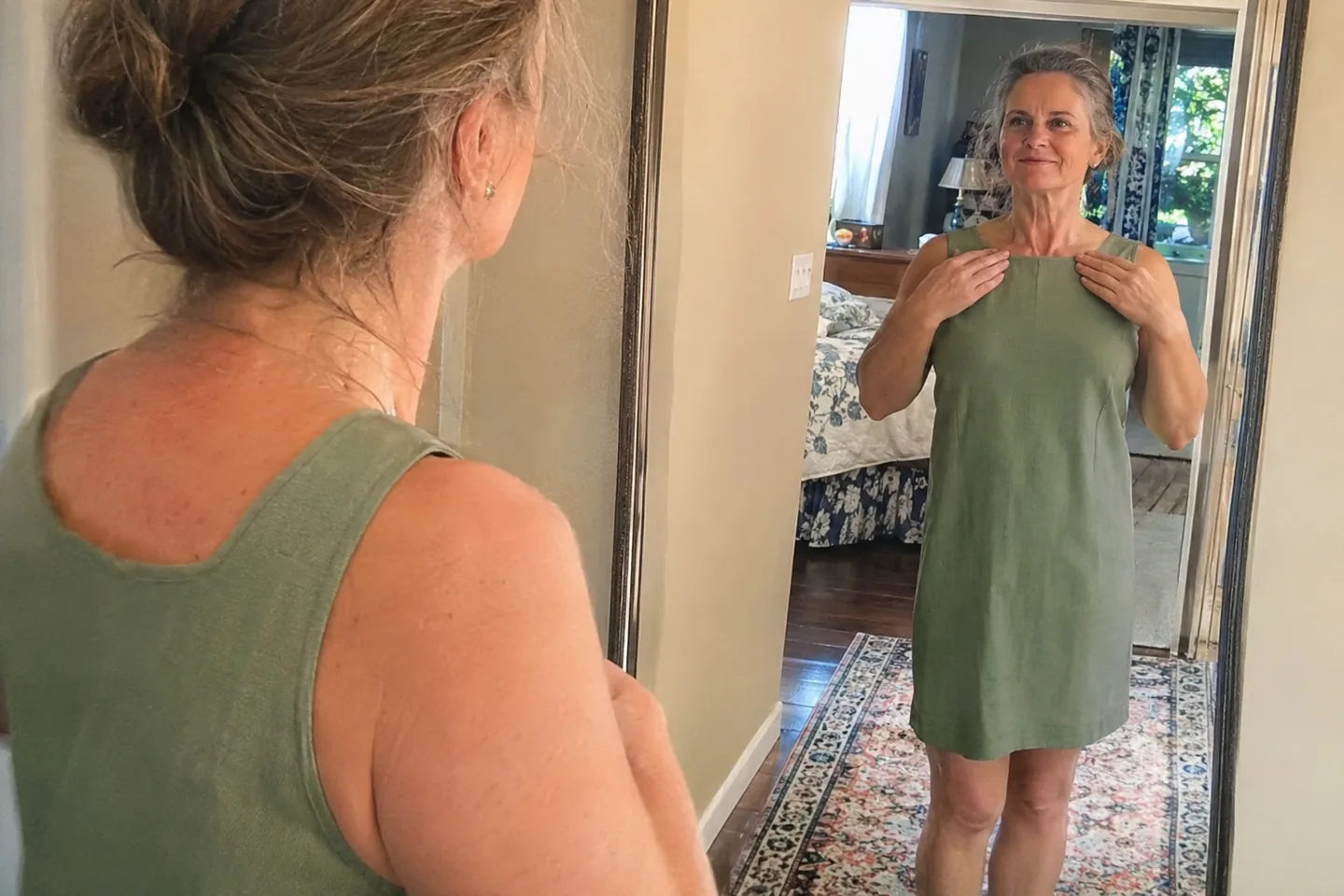
Identify the piece that is coming out
A neckline facing finishes the garment edge from the inside. If a shaped inner section rolls over that edge and becomes visible, first identify it as a facing rather than assuming it is a full lining or a loose storage loop. Note whether the edge turns out at the front, back, one shoulder or near an opening.
Support the dress and look inside without stretching the neckline wider. Then compare how it sits when worn over the intended underlayer. Record whether the same section returns outside after ordinary movement. A photograph of the inside edge and a wider view of its location will give you a clearer question than repeatedly pushing it back into place.
| What is visible? | What to record |
|---|---|
| Shaped inner section at the neck | Where it rolls over the finished edge |
| Broad inner garment layer | Whether the concern belongs to a lining |
| Small ribbon or loop | Its attachment points and intended purpose |
| Open seam or loose stitches | The location and current condition |
What understitching actually joins
Seamwork describes understitching as a line near the facing edge that helps keep it on the inside without a visible stitch line on the garment's outer face. It is not the same as stitching straight through every layer from the outside.
Twig + Tale's example shows the seam allowance pressed toward the facing and held to it by that additional stitching. The illustration helps explain which layers are joined. It does not establish that an unfamiliar finished dress is missing a step or that adding one line will resolve every rolling edge.
Construction instructions and a finished dress are different cases
Megan Nielsen's understitching tutorial explains the technique while a garment is being made. At that stage, the maker has access to the seam allowances and the pattern's construction sequence. A ready-to-wear dress may have other layers, an opening or areas that cannot be reached in the same way.
For a dress you are sewing, use its pattern instructions and an appropriate fabric sample before applying a technique. For a purchased dress, retain the original state while identifying the issue. Do not cut the facing narrower, stitch through the outer fabric or press an unfamiliar material simply because one tutorial uses that step in another construction.
Make the movement check repeatable
Try the ordinary underlayer and the intended closure state. Let the neckline settle without arranging it for a photograph. Sit, stand and make a comfortable everyday reach, then return to rest. Note whether the same edge rolls out, whether the whole dress shifts or whether the issue appears only with a particular layer.
Keep those observations separate. A facing that appears after movement and an outer neckline that sits away from the body are related questions to inspect, not identical findings. Do not assume a size change or one added tack will answer both. If you compare another garment, describe its construction separately rather than using its hidden finish as a rule for this dress.
Do not confuse the facing with other internal details
A hanger loop has a storage purpose and may sit near the same area. Our hanger-loop guide helps identify those attachments. A shoulder strap holder may manage an undergarment strap, while a lining chain connects garment layers elsewhere. Their proximity does not make them interchangeable fixes for a rolling facing.
If a small attachment is broken, record its original end points where visible. Keep the loose part with the garment and ask what it connected before replacing or removing it. A section of facing visible at the neck does not identify the purpose of every nearby ribbon.
Choose the next useful check
I can identify the facing, but it rolls out
Record its location and what happens after ordinary movement. Ask how this particular neckline is finished and whether its fit or condition needs assessment before selecting a repair.
I cannot tell whether it is facing, lining or a loop
Keep the detail intact and take an inside view that shows its full shape and attachment points. Ask the maker or dressmaker to identify it before changing anything.
The dress is new or a seam is open
Retain the tags and original condition, check the actual return terms and show the retailer the exact concern. Do not turn a potentially returnable garment into an alteration project before deciding.
Bring a precise question to the fitting
Describe the edge, the section that returns outside and the outfit used for the check. Ask what any proposed work joins, whether it will show on the outside and what it changes about the garment. A useful assessment explains the actual construction and the scope of the work; it does not depend on naming a universal cause from a single photograph.
Keep reading
 Guides
Wedding Guest Outfits for Daytime, Evening and Garden Weddings
What to wear to a wedding as a guest: outfits by time of day, venue and season, with a checker that lists what to confirm before you shop.
 Guides
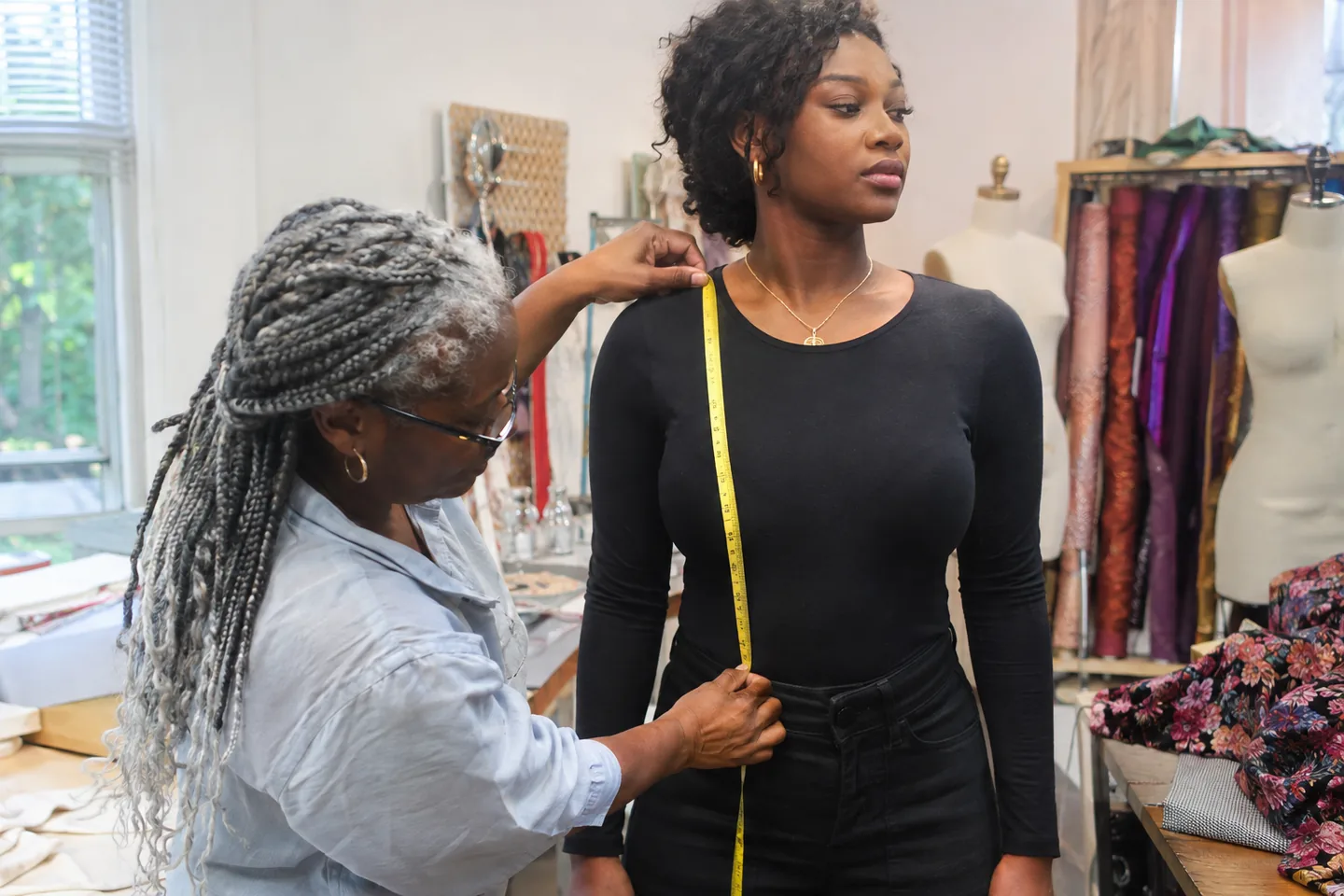
Shoulder to Waist Measurement: A Clear Guide for Dresses
Learn where to start and end a shoulder-to-waist measurement, distinguish front and back routes, and ask your dressmaker the right questions.
 Guides
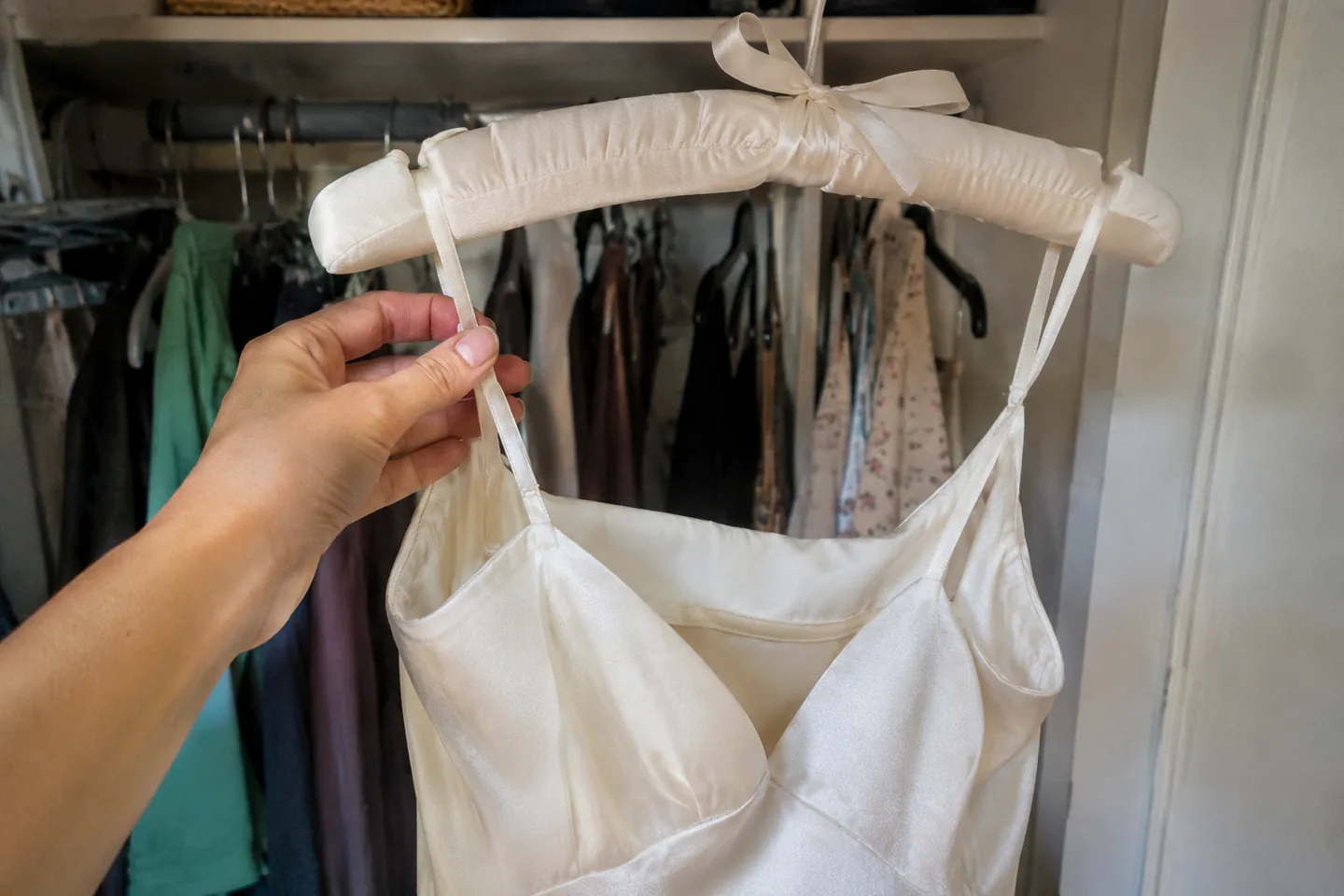
Dress hanger loops: identify the ribbons before cutting
Identify dress hanger loops, separate them from lining links and straps, and check the support arrangement before removing an unfamiliar ribbon.