Guides
Strings connecting your dress lining? Check the thread chains
The small strings between a dress and its lining can be thread chains: flexible links that let the layers move while keeping them connected. Leave a link intact until you know its job. Check both ends and its location before treating it as loose thread or a packing stitch.
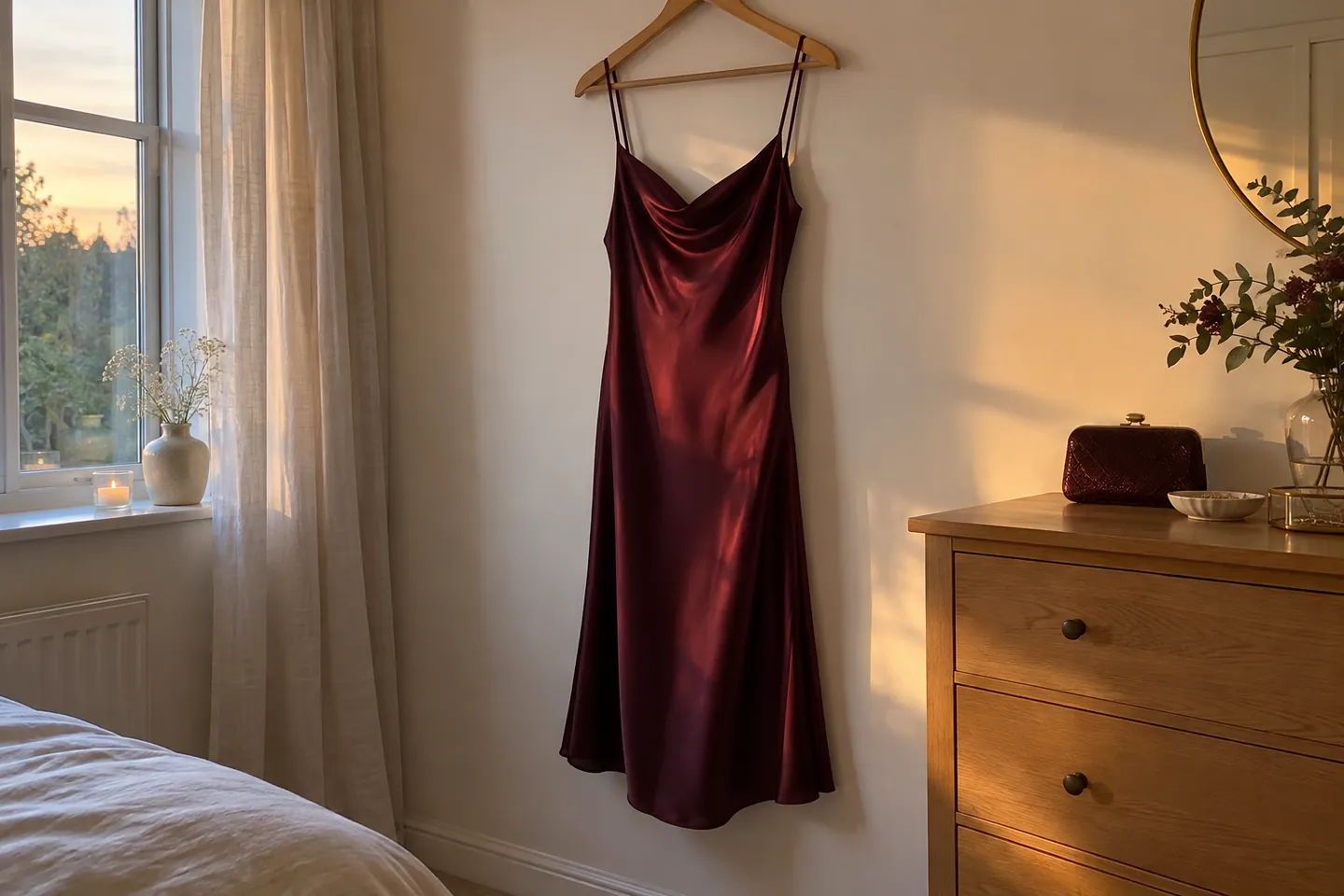
What are the strings connecting a dress to its lining?
A short link between the inner and outer layers may be a thread chain, also called a swing tack or French tack in sewing references. It holds particular points together while leaving room between the layers. Its presence alone does not show that a seam was left unfinished.
Itch to Stitch's lining-tack guide shows several ways to make these links. They need not all look like a delicate hand-crocheted chain. Identify what the thread connects before deciding that an unfamiliar finish is a fault.
| What you can see | What to establish |
|---|---|
| A bridge between two layers | Which seam or allowance each end joins |
| A loop returning to the same layer | Whether it carries a belt or another intended fastening |
| An end that appears detached | Whether an attachment is damaged or its purpose remains unknown |
Why is the connection loose rather than sewn flat?
A flexible link can anchor layers without joining their entire edges. Twig + Tale demonstrates that principle on a lined cloak: the lining remains connected while retaining movement. That illustrates a purpose, not a required construction for every dress.
A lining may have a separate hem, an enclosed finish or another arrangement. Do not pull the two layers apart to test how much a link can take. Our lining-below-the-hem guide helps describe the edge relationship separately.
How do you tell a lining link from a belt loop?
Follow the two ends visually, without tugging. Tilly and the Buttons shows different uses for thread chains, including lining attachments and loops carrying narrow waist ties. A similar-looking technique can therefore perform a different job.
Which connection can you identify?
One end joins lining and one joins the outer layer
Record the two attachment locations and leave the link intact. A flexible bridge can be deliberate. Its exact construction belongs to the garment.
Both ends return to one area beside a waist tie
Check whether it is a carrier for the tie rather than an inner-layer bridge. Keep the original arrangement while you confirm its intended use.
A loose end or hidden endpoint remains unclear
Keep the purpose unknown. Photograph the visible end without pulling it out, and ask the maker or repairer to identify the attachment.
Should you cut a thread chain before wearing the dress?
Leave an unidentified attachment in place. A link securing a lining is doing a different job from a temporary stitch holding an opening closed. The dress-opening comparison explains why the inside construction matters more than a label.
If you need an alteration, show the connection before work starts. Cutting it first removes evidence of where the layers were joined. It also does not establish why a hem shows, a lining shifts or a seam pulls.
What does a broken or taut link tell you?
It gives you a condition to describe, rather than a complete diagnosis. Made to Sew's demonstration uses a thread chain to link layers while allowing movement. A connection pulling those layers needs assessment of the actual arrangement.
Note the side and location, whether both ends remain attached and what changes with ordinary comfortable movement. Stop at tension. Do not replace the link with a tightly sewn join or copy a length from a different garment to prove a cause.
Choose the observation you need to keep
The link remains attached and the layers move comfortably
Keep the arrangement intact. Record any separate concern about the hem or coverage; a visible link alone does not prove a repair is needed.
The link becomes taut or a layer pulls
Stop the movement and show both attachment points to a fitter. Keep the cause and replacement method unconfirmed until the whole construction is assessed.
An end is detached or nearby cloth is damaged
Photograph the location without testing its strength. Ask for an assessment of the anchor and surrounding cloth, not simply a shorter or stronger thread.
What should you bring to a repair or fitting?
Bring the dress, its intended underlayers and a short observation note. State which side contains the link, what each end joins and when you noticed a change. Mention cleaning or previous alterations as history, without declaring them the cause.
What if the event is close?
Choose an outfit you can already wear comfortably if an attachment or repair remains unresolved. A planned repair is different from a confirmed wearable dress. Use the party-dress guide to assess the complete outfit, with the intended shoes and layers.
A small internal detail can deserve a careful look without turning into a reason to discard a dress. Keep the evidence intact, ask a specific question and decide after the garment has been assessed.
Questions about strings inside a lined dress
What are thread chains in a dress lining?
They can be flexible links joining the lining to the outer garment at particular points. Identify both ends before deciding what a thread does.
Is a loose lining connection unfinished sewing?
Flexibility can be intentional. Its appearance alone does not establish a fault; inspect the actual attachment and condition.
Are French tacks and swing tacks related terms?
Sewing references use these names for flexible attachments between layers. The method and appearance can vary, so check the actual detail.
Can you cut the strings inside a dress?
Leave unidentified links intact. Confirm their job with the maker or repairer before cutting an attachment that may secure the lining.
How do you create a thread chain?
It is a sewing technique using linked thread loops. The cited maker tutorials demonstrate methods; choose instructions appropriate to the garment rather than copying an unrelated repair length.
Does every lined dress need these links?
Construction varies. A separate hem, enclosed lining or another design may use a different attachment. Absence alone does not prove a defect.
Keep reading
GuidesDress lining showing below the hem? Check both layers
Identify the layer below your dress hem, check normal movement and prepare a useful fitting request with two local aids and clear layer diagrams.
GuidesKick pleat vs slit: what your dress opening actually does
Identify a dress slit, vent or folded kick pleat, then check normal movement and coverage with two practical decision aids before an event.
PartyParty Dresses: How to Pick the Right Cut, Length and Fabric
Choose a party dress by occasion, cut, length and fabric. A practical guide with an interactive finder and fit notes for evenings out.