Guides
Dress lining showing below the hem? Check both layers
A lining that shows below a dress hem needs a check of both layers before any cut. Note where it shows, how the dress sits and what changes with normal movement. Keep the straps at their intended setting. Ask a fitter to assess the finish, not just a length.
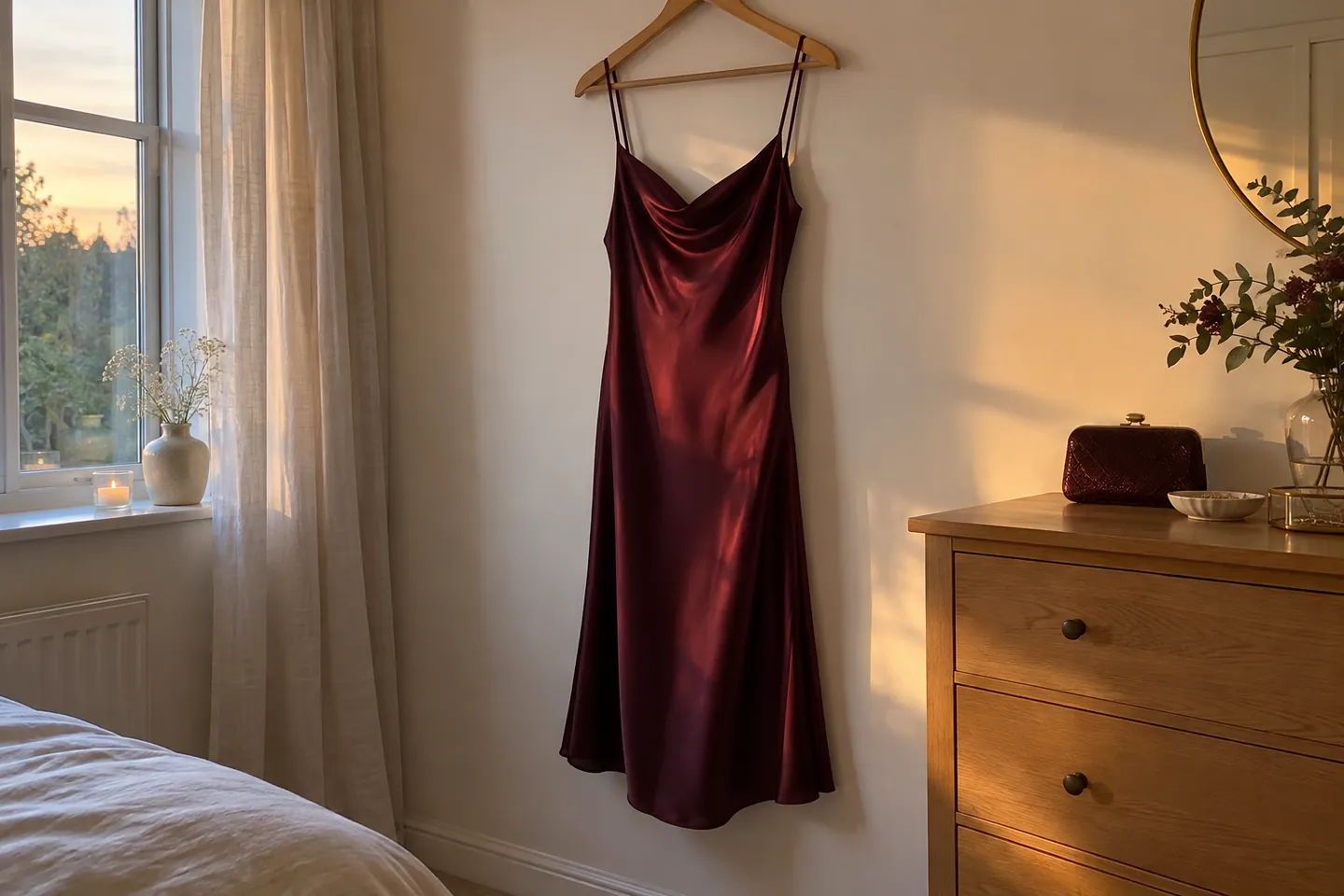
A pale edge below a dark dress can turn a simple outfit check into a rushed repair. Start by naming that edge. A separate slip, a deliberately exposed underskirt and an attached lining call for different decisions. This guide helps you prepare a useful fitting request; it does not tell you to trim an unknown garment.
| Visible layer | Check first | Keep separate |
|---|---|---|
| Separate slip | Its own position and intended length | The dress construction |
| Attached inner layer | Its hem, attachments and movement | A proposed alteration |
| Exposed design layer | Maker's description and full-length pictures | An assumed defect |
Is it a lining, an underlining or a separate slip?
A lining is an inner garment layer; underlining is generally handled with the outer fabric as part of the construction. Forget-me-not Patterns' underlining example shows the distinction. A loose inner edge alone does not identify every attachment higher up.
Look at the inside without pulling layers apart. Record whether the inner piece belongs to the dress or is a separate garment. If a contrasting border appears in the maker's pictures, ask whether it is intended before treating it as excess length.
Does the edge show at rest or after movement?
Check the dress in its intended wearing arrangement, then take ordinary comfortable steps and sit. Note the exact place and situation in which the inner edge appears. Do not stretch the dress, tug the lining down or change the straps to produce a preferred answer.
Choose the observation you can make
Open a case to identify the next useful note. These checks do not diagnose a construction fault.
The inner edge shows while standing still
Name the location and identify the layer. Photograph both edges without separating attachments; ask whether their relationship matches the intended finish.
It appears only after ordinary movement
Record the movement and whether the layers settle afterward. Give the fitter that sequence rather than a guess about how much to shorten.
The outer hem pulls up or the lining feels taut
Stop the check at comfortable movement. Describe the tension as well as the visible edge; a shorter lining is not automatically the answer.
Should a dress lining hang free at the bottom?
Some linings have separate hems; others connect to a hem allowance with room for movement. Doina Alexei's three finishing methods show why free-hanging and enclosed finishes cannot be treated as identical.
A thread chain between seams may be an intentional loose connection. Leave unfamiliar chains and stitches intact. If one looks broken or an attachment pulls, show that detail to a repairer. Sewing the entire bottom edge to the dress can change a construction that was meant to move independently.
How much shorter should the lining be?
The correct relationship belongs to the garment's design and finish. A tutorial's cutting or folding allowance is not a ready-made alteration measurement. The Sewing & Craft Alliance lining guide describes one free-hanging construction, while Doina Alexei separates several finishes.
For a formal gown, Kathy Healey's Threads method establishes the outer hem before completing and checking the lining. The transferable point is the sequence of assessment, not a fixed amount to cut from every dress.
What should you tell the person doing the alteration?
Bring the actual garment and describe the intended outfit. State whether the issue existed before cleaning, strap adjustment or an earlier alteration, without assuming that the last event caused it. Add any information from the care label and previous repair.
Build the useful part of your fitting request
You have a clear location and movement note
Ask: “Could you assess both layers here with the dress worn as intended? This is when the inner edge shows.” Include what happens before and after sitting.
You also changed a strap setting or underlayer
Show the intended setup and the earlier arrangement if known. Ask for the neckline, bodice and hem relationship to be considered together.
You do not know how the lining is attached
Ask for a construction assessment before agreeing to a length change. Leave the amount, method, cost and completion date unconfirmed until discussed.
Can you hide it by changing the straps or adding tape?
A strap change affects how the whole dress sits; it does not isolate an inner-hem problem. Use the strap measurement guide to record the intended setting and the skirt-length guide to label separate edges.
Do not treat an adhesive or a pin as an approved finish for an unidentified fabric. If the lining also catches the closure, use the dress zipper observation guide. For an imminent event, the party-outfit guide can help you choose an already usable alternative.
Questions about a lining below the hem
What is the bottom edge of a dress called?
The finished lower edge is the hem. Name the outer hem and lining hem separately when describing a layered dress.
How do you hem a dress lining?
The method depends on its attachment and fabric. A free-hanging finish differs from an enclosed hem; identify the construction before planning a change.
Can you cut off the part that shows?
A visible edge does not establish a cutting amount. Assess the outer hem, attachments and comfortable movement first.
Are thread chains at the side seams a mistake?
They can be intentional loose connections between layers. Leave them intact and ask about a broken or taut attachment.
Does showing after washing prove shrinkage?
The timing is useful information, not proof of a cause. Show the care label and describe the before-and-after appearance.
Will raising the straps solve it?
That changes the position of the whole dress. Record the intended setting and assess the bodice and both hem layers together.
Keep reading
 Guides
How to Measure Skirt Length From Waist to Hem
Measure a skirt from waistband to hem, record the front and back separately, and compare a listing without confusing body and garment lengths.
GuidesHow to measure dress straps without mixing up the lengths
Check dress-strap endpoints, slider settings and hardware before comparing a listing. Use two decision aids and a clear seller request, without guessing a size.
GuidesDress zipper stuck in fabric: what to check before pulling
Identify a caught lining, strain or a damaged dress zipper. Use two local decision aids, clear stop points and an observation note for a repair professional.