Guides
Assess a loose dress armhole before changing the seams
If a dress armhole is too big, locate the gap with the dress settled over its intended undergarment. An edge that stands away, an opening that sits too low and a loose lining need different assessments. Record the front, back and movement before choosing a correction.
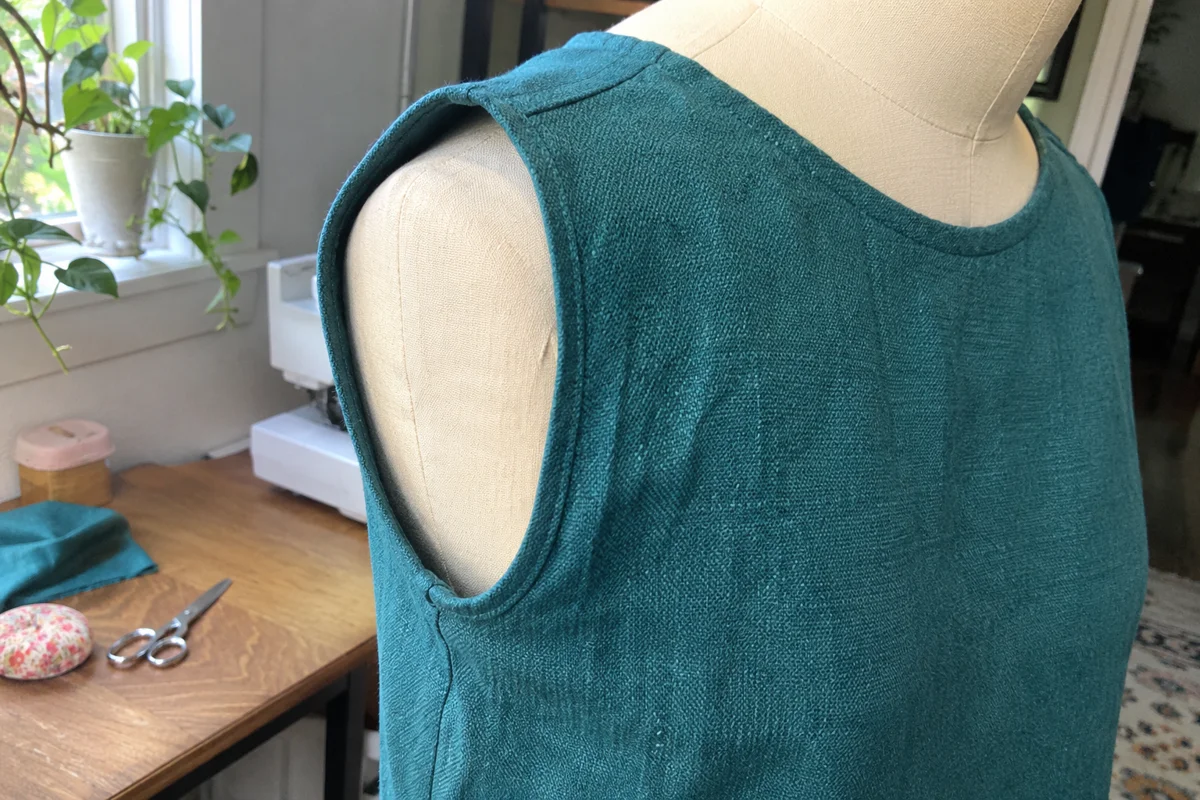
If a dress armhole is too big, first locate the gap with the dress settled over its intended undergarment. An edge that stands away at the front, an opening that sits too low and a loose lining need different assessments. Do not automatically take in the side seam or shorten the shoulder: either change can create a new fit problem.
Where does the opening fail to follow the body?
Stand naturally with arms resting. Look at the front, underside and back of each opening separately. Then reach forward gently and return to rest. A little movement clearance is different from an edge that remains folded outward. Record whether the gap is present at rest, only during movement or only in one layer. Keep the neckline and waist position in view so an isolated close-up does not conceal a shifted bodice.
Inspect with the same undergarment you expect to wear. A change in its shape can change how the bodice sits, but no particular bra is a universal repair for an incompatible cut. Our dress measurement guide keeps the garment question separate from the size label. Use your own comfort and coverage preference as the decision standard.
Separate a long edge from a low opening
In-House Patterns explains that a gaping front armhole can come from excess length along that edge, even when the garment fits below the bust. Its tutorial also points out that a pattern correction can affect a sleeve. That is an important limit: a pattern adjustment is not a promise that a completed lined dress can receive the same change easily.
| Observation | What to ask the repairer |
|---|---|
| Front edge stands away; bodice otherwise stable | Can shaping be redistributed through an existing seam? |
| Entire opening sits lower than preferred | Can coverage be changed without distorting the shoulder, neckline or waist? |
| Outer cloth lies flat but lining shows | Is the lining or edge finish moving independently? |
| Gap appears with drag lines across the bust | Does the whole bodice need a different fit rather than a smaller opening? |
This table organizes observations; it does not diagnose an individual body. A low opening cannot always be raised without adding compatible fabric, and taking in width cannot be assumed to solve an edge-length problem. Keep the original construction in the conversation.
Make a three-view record before an appointment
- Photograph the whole bodice from the front with arms relaxed.
- Record each side with the arm held only far enough away to reveal the edge.
- Photograph the back and note whether the neckline or shoulder has moved.
- Return to a natural stance, sit and reach once, then check whether the dress settles again.
- Write one specific request, such as less visible opening at the front while keeping comfortable reach.
Do not hold the dress in a preferred position for every photograph. The repairer needs to see how it behaves without your hands supporting it. If an assistant uses pins during a fitting, let them manage the temporary adjustment and remove anything sharp before independent movement. A home record does not require you to pin a garment on your body.
Why not simply pinch out a dart?
A test garment can reveal how a proposed change affects the rest of the bodice. Minerva's pattern guide describes moving excess edge length into shaping and recommends assessing the garment in a natural posture. A finished dress adds constraints: lining, binding, trim, print placement and available seam allowance. Ask where the proposed shaping would go and how visible it would be.
The comparison of princess seams and darts helps name the construction already present. If the dress has a sleeve, changing the armhole also changes the opening into which that sleeve fits. A sleeveless alteration cannot be copied unchanged onto a sleeved garment. Avoid cutting a deeper opening as an exploratory fix; removed cloth cannot be put back by pressing.
Check the finishing layer before changing the fit
Turn the dress inside out off the body. Check whether a binding twists, a facing rolls outward or a lining attachment pulls one area of the edge. These are useful observations for an appointment, not an invitation to unpick the whole opening. The facing inspection guide addresses an unstable finish separately from the amount of room in the bodice.
After a repair, repeat the same photographs and movement checks with the same undergarment. Confirm that the preferred coverage remains when seated and that the neckline and waist still sit comfortably. Keep a note of the actual work done. If the proposed correction would sacrifice the movement you need, choosing another cut may be more useful than making an increasingly complicated series of alterations.
Keep reading
 Guides
How to Measure Yourself for Dresses and Jumpsuits
Measure bust, waist, hip and length correctly, then use the size calculator to find the size range to start with for dresses and jumpsuits.
 Guides
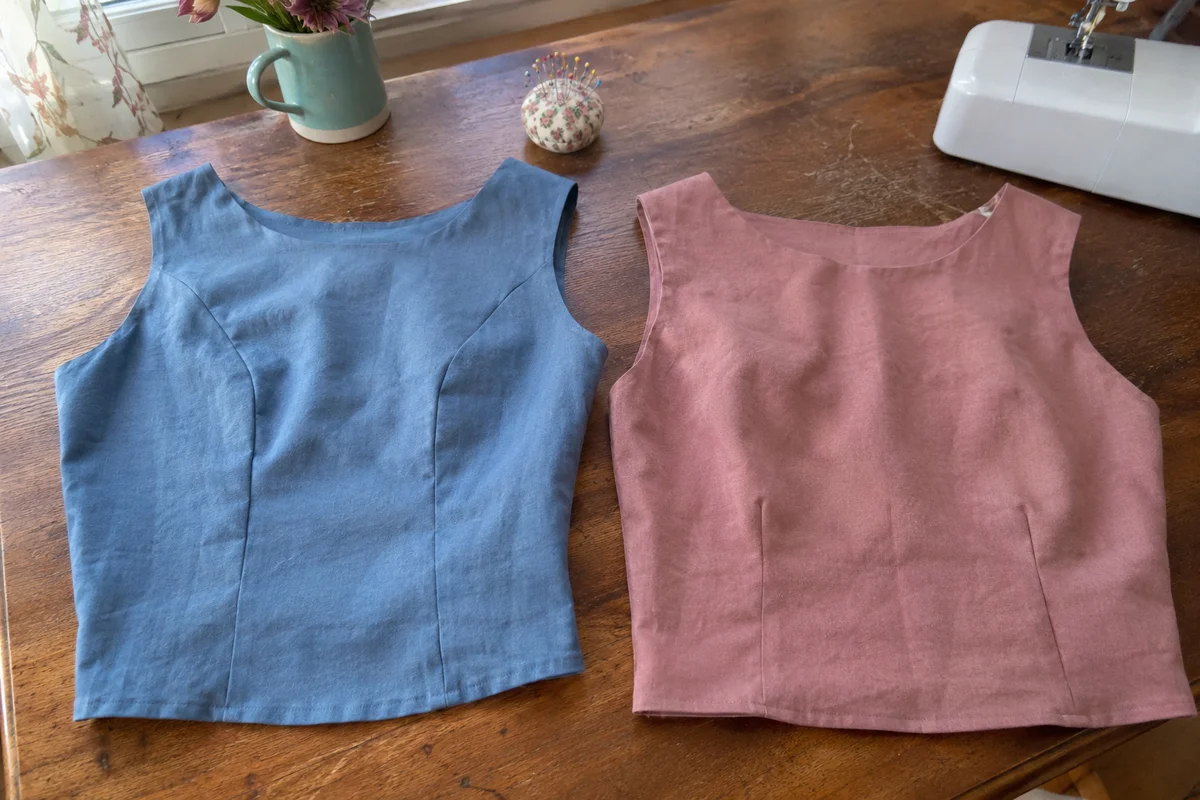
Princess seams and darts: identify the shaping in a dress
Compare princess seams and darts in a finished dress. Identify shaping lines, separate support details and prepare a clear question for a fitting.
 Guides
Dress facing flipping out: check the neckline finish
Identify a neckline facing that rolls outside a dress, understand what understitching joins, and record the concern before choosing a garment-specific repair.