Guides
Princess seams and darts: identify the shaping in a dress
A dart shapes fabric through a tapered stitched fold within a panel. A princess seam joins shaped panels along a longer line. Both can shape a dress bodice. Identify the actual construction and layer before discussing fit; neither name guarantees comfort, a particular silhouette or an easy alteration.
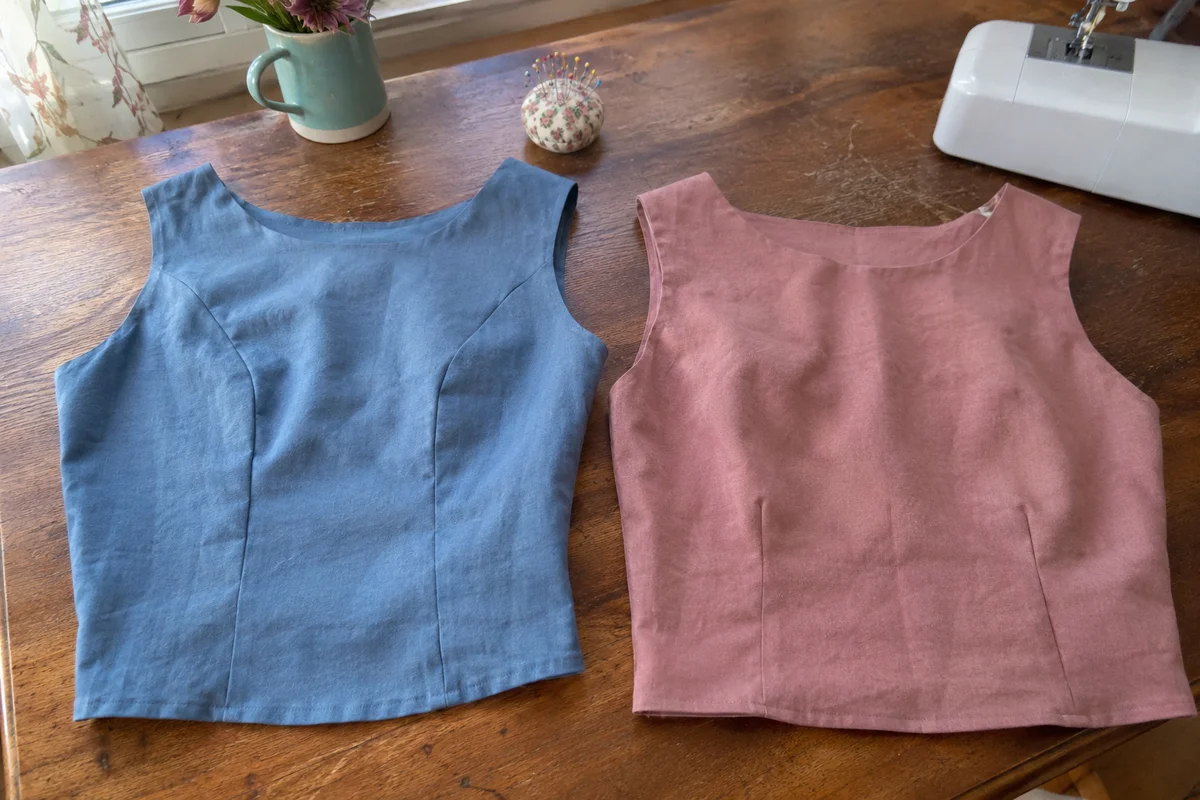
Look for a shaping line, not a silhouette label
A dart is a tapered fold stitched into a piece of fabric to create shape. A princess seam joins shaped panels along a longer line. Both can shape a dress bodice. Identify what the garment actually contains before asking about fit: a decorative line, a dart and a panel seam are not interchangeable evidence.
Start with the dress measurement guide if you need a consistent body or garment record. This comparison helps you name construction; it does not calculate an alteration or decide which design fits every body.
How can you tell a dart from a panel seam?
Follow the line gently with the dress resting in its ordinary shape. A dart commonly narrows toward a point within a panel. A princess seam continues between joined pieces, often from the shoulder or armhole toward the waist or farther down the garment. A lining or trim can conceal the reverse side, so do not unpick anything to confirm your guess.
The Sewing & Craft Alliance princess-seam guide illustrates the relationship between dart shaping and joined bodice panels. Use its drawings to recognize the construction idea. They are not an instruction to recut a finished dress you want to keep.
| Feature | What to observe | What it does not prove |
|---|---|---|
| Dart | Tapered stitched fold within a fabric panel | A universal amount available for letting out |
| Princess seam | Long join between shaped panels | That every section can be altered equally |
| Decorative topstitching | Visible surface stitching | A separate panel underneath |
| Hidden construction | Lining or trim obscures the reverse side | That an unseen dart or seam is absent |
Why can two dresses with the same measurements hang differently?
A few widths and lengths do not describe every curve, material or construction choice. Two bodices may distribute their shaping differently. For a fictional example, one dress uses short waist darts and another has curved front panels. Matching their listed waist numbers does not establish equal room at every point between the waist and neckline.
Keep the same undergarments and ordinary posture when comparing. Note where a line sits and where movement feels restricted, rather than deciding from the name alone. Our shoulder-to-waist guide supplies a separate length record; it does not locate the ideal curve for every wearer.
Does a princess seam guarantee an easier alteration?
No. A long seam gives a fitter another construction feature to assess, but available allowances, fabric, lining and the requested change still matter. Ask which section would be changed and how the neighboring areas would behave. Do not assume that taking in at the waist leaves the bust and skirt unaffected.
Seamwork demonstrates transferring dart shaping into princess seams on a pattern. That explains the relationship between the two systems. A pattern exercise has access to uncut pieces and reference lines that an existing lined dress may not provide; it is not a promise of a simple finished-garment conversion.
| Visible feature | What to identify | What it does not prove |
|---|---|---|
| Tapered stitched fold | A dart within a panel | A universal fit preference |
| Long curved panel join | The route of a shaping seam | An available alteration allowance |
| Band inside the waist | A separate support component | That every nearby seam needs changing |
| Line visible only on the surface | Whether it is decoration or construction | That direction alone identifies a princess seam |
Keep support and shaping as separate questions
A dress may also include a waist stay, lining or small strap attachments. Those details do not become princess seams merely because they sit near a shaping line. Identify the layer and function you can observe. If the lining pulls while the outer bodice looks smooth, include that difference in the fitting note.
Use a short handoff: garment, visible line, location of concern, intended undergarments and movement that matters. For an illustrative case, write that the left front panel feels restricted when sitting rather than asking to remove a fixed amount from every seam. A dressmaker needs the actual garment to assess the next step.
Choose by the garment you can wear
Neither construction is automatically more flattering or more comfortable. Compare the actual dresses under the same conditions. If you like one as it is, there is no need to change its shaping method. If a concern persists, keep the garment intact and ask for an assessment before commissioning work or losing a return option.
Photographs and labels can help you describe a feature, but they cannot reveal every hidden allowance or establish how an alteration will turn out. A useful comparison ends with a clearer observation and one concrete question, rather than a universal rule about the best seams.
Questions about dress shaping
Are princess seams the same as darts?
They can serve related shaping purposes, but a princess seam joins panels while a dart takes shape within a panel.
Does every vertical line mean a princess seam?
No. A line can be decorative, a fold or another seam. Identify the actual join and its route rather than relying on direction alone.
Can a darted dress be converted to princess seams?
A pattern can be redrafted, but a finished garment has material and construction limits. Ask about the actual dress rather than assuming conversion is straightforward.
Keep reading
 Guides
How to Measure Yourself for Dresses and Jumpsuits
Measure bust, waist, hip and length correctly, then use the size calculator to find the size range to start with for dresses and jumpsuits.
 Guides
Dress waist stay: what the internal band does
Identify a dress waist stay, check its attachments and separate support from outer fit before changing an unfamiliar band or forcing a closure.
 Guides
Dress lining showing below the hem? Check both layers
Identify the layer below your dress hem, check normal movement and prepare a useful fitting request with two local aids and clear layer diagrams.