Guides
When a dress neckline stands away: what to check
For a dress gaping neckline, first compare the edge at rest, seated and during an ordinary reach, with the intended undergarment. Record whether the edge stands away or an inner facing rolls outward. Shortening straps is only one possible change; have the actual bodice assessed before choosing an alteration.
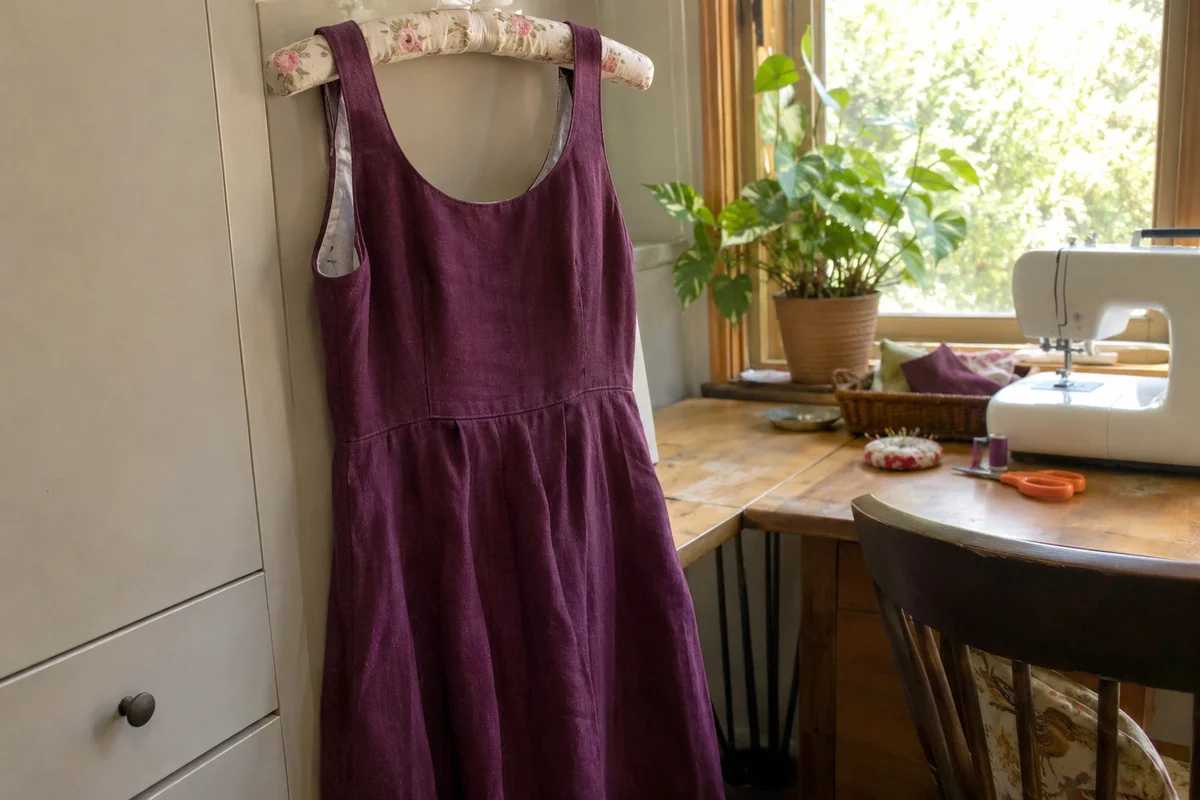
Start with a short fitting record
Try the dress with the undergarment and fastening arrangement you intend to wear. Let the shoulders settle and stand naturally. Note where the neckline stands away, whether that space is even on both sides, and whether the inner facing is visible. Do not hold the edge against your chest while deciding how it behaves.
Repeat the observation seated and with an ordinary forward reach, then return to rest. A neckline that changes during movement raises a different question from one that stands away all the time. Write down the conditions rather than choosing an alteration from a single photograph. The dress measurement guide helps keep body measurements separate from these garment observations.
Is the opening too low, or does the edge stand away?
A deliberately low neckline may have less coverage than you want while still following its intended shape. A gaping edge stands away from the wearer. A facing that turns outward is another observation again. Identify which concern matters before asking someone to shorten straps or take in a seam.
| What you observe | Record next |
|---|---|
| Edge stands away at rest | Location, symmetry and the intended underlayer |
| Space appears only during movement | The movement and whether the edge returns to rest |
| Inner facing shows outside | Which layer rolls and where |
| Low but settled neckline | Your preferred coverage rather than a presumed defect |
Use the facing rollout comparison for that last construction concern. Adding a visible row of stitching to control an inner edge is not automatically a fitting correction for excess neckline length.
Why is shortening the straps not an automatic answer?
Changing strap length can move more than the neckline. Ask the fitter to observe armhole clearance, bust shaping and waist position before deciding the amount of any change. A dress that looks tidier while you hold both shoulders upward may become uncomfortable when worn normally.
In a fictional fitting note, a wearer has a small front gap at rest, comfortable armholes and a waist seam already at the preferred height. That is a reason to assess the bodice, not an instruction to lift the entire dress. The strap measurement method records a finished strap dimension without treating it as the solution to every neckline problem.
Cashmerette's Roseclair fitting notes recommend wearing the intended undergarments when evaluating its test bodice. Its pattern-specific adjustments belong to that construction. Use the setup principle, then ask how your actual finished dress differs.
What if the neckline stretched during sewing?
A construction problem and a fit problem may look similar. Cashmerette's gaping-neckline tutorial first discusses the possibility of stretching during construction before describing pattern changes. Those changes apply to a pattern and test garment; they are not permission to cut into a purchased dress using a generic amount.
Tell the dressmaker whether the concern appeared after sewing, after care or only when worn, if you actually know. Leave the history unknown if it is a secondhand garment. Ask what can be inspected without opening seams, what the proposed repair will change, and whether the result will be visible on the outside.
Take an observation, not a preselected operation
Bring the dress and intended underlayer. State the coverage you want and the movement the outfit must allow. Keep three columns in your note: what happens at rest, what changes during movement, and what remains unknown. Photographs can support the note but cannot reveal every hidden seam allowance or attachment.
Cashmerette's common fitting guidance stresses the need for room to move rather than fitting only a stationary pose. For an event dress, recheck sitting and reaching after any proposed adjustment. If the garment cannot offer your preferred coverage comfortably, choosing a different neckline may be more useful than forcing this one into a different design.
Keep reading
 Guides
How to Measure Yourself for Dresses and Jumpsuits
Measure bust, waist, hip and length correctly, then use the size calculator to find the size range to start with for dresses and jumpsuits.
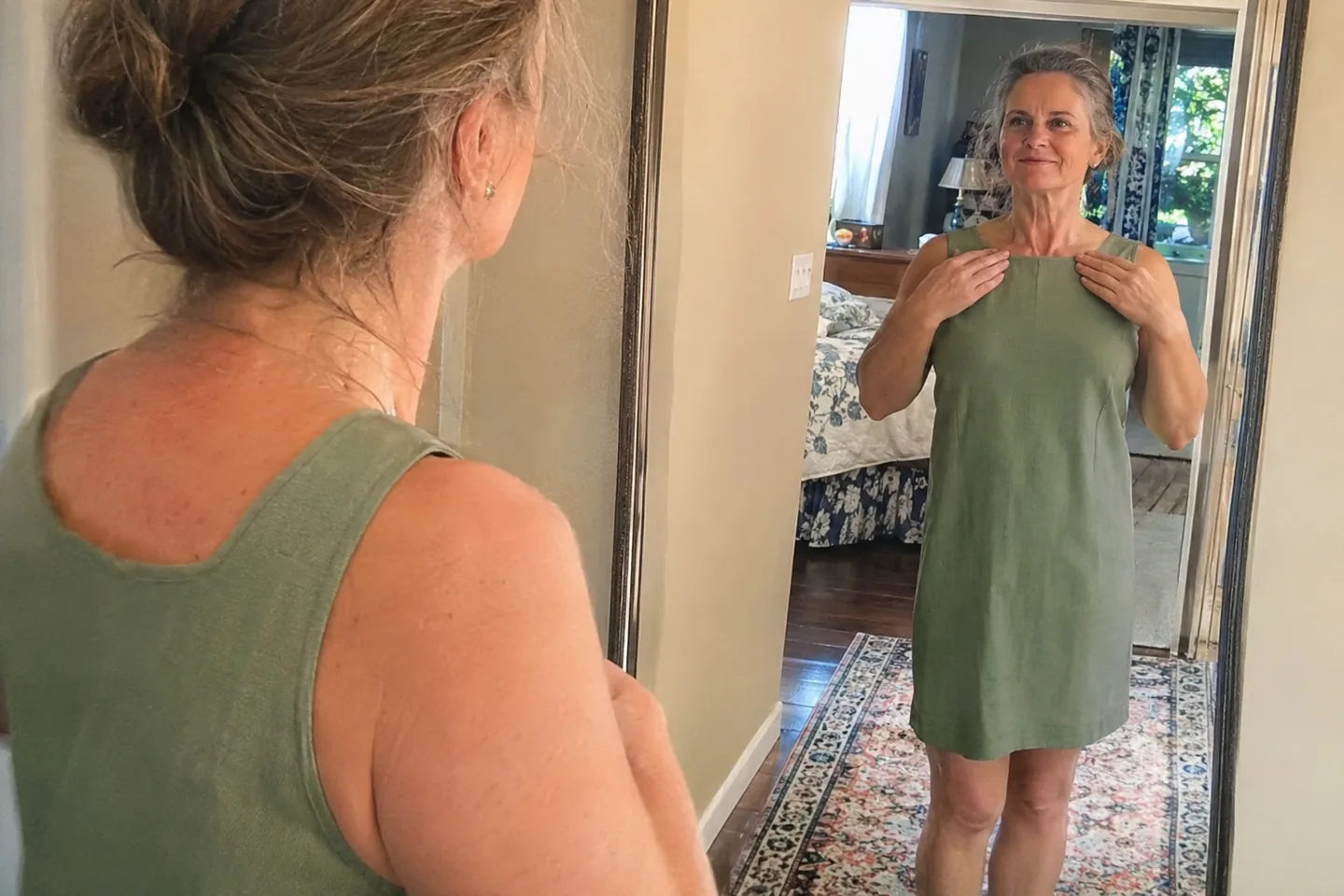 Guides
Dress facing flipping out: check the neckline finish
Identify a neckline facing that rolls outside a dress, understand what understitching joins, and record the concern before choosing a garment-specific repair.
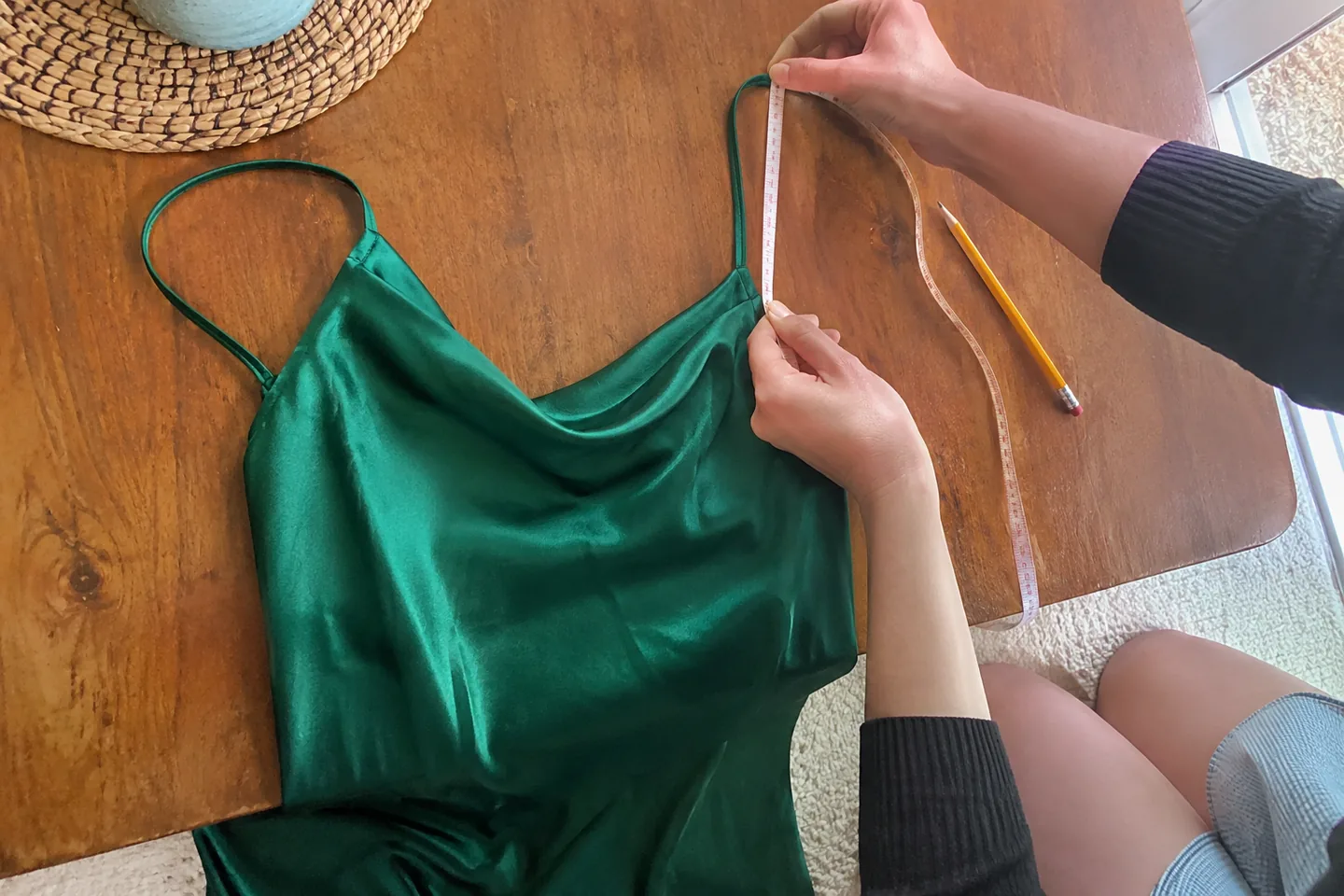 Guides
How to measure dress straps without mixing up the lengths
Check dress-strap endpoints, slider settings and hardware before comparing a listing. Use two decision aids and a clear seller request, without guessing a size.