Guides
Dress lining riding up: find out which layer moves first
If a dress lining rides up, first find out which layer moves. Stand, sit, stand again and walk, and write down what the outer skirt and the lining each do. Then check the lining length, how the layers are attached, the underlayer and the fit before asking a dressmaker to change anything.
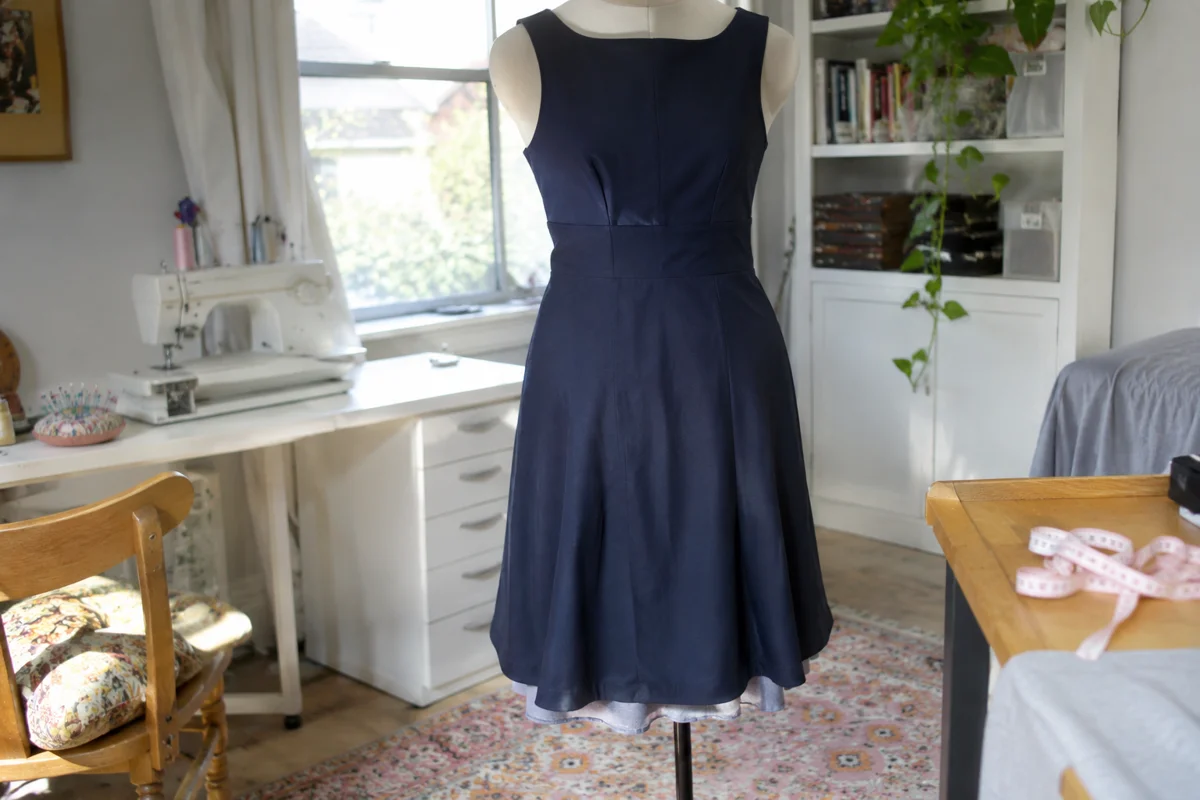
Which layer is actually moving?
When a dress lining rides up, the outer skirt or the lining may be the layer that climbs, or both may travel together. The cure differs, so find out first. Put the dress on with the underlayer you plan to wear and stand still. Then sit, stand again and walk across the room. After each movement, look in a mirror and write down what you see: does the lining edge show above the outer hem, does the outer skirt hitch up, or does everything lift together?
Do this with the dress off the hanger for a minute so it has settled. If a seam edge digs in or a zip pulls, stop and take the dress off. The goal is a clear record, not a forced test.
| Movement | Outer layer | Lining |
|---|---|---|
| Standing still | Where the hem sits | Whether it hangs inside or shows |
| After sitting and standing | Whether it stays or lifts | Whether it stays or climbs |
| After a short walk | Any twist or bunching | Any twist or bunching |
Keep this note. It is the information a dressmaker needs, and it spares you from guessing between four possible causes.
What can make a lining ride up?
Sewing.org's lining guide describes a lining as assembled separately, like a second garment, placed inside wrong side to wrong side and attached along the edges. That means the lining and the outer layer can move independently between those attachment points. Four causes are worth checking.
| What you see | Possible cause | Next step |
|---|---|---|
| Lining edge climbs above the outer hem after sitting | Lining shorter than needed, or fixed at the hem so it cannot hang | Ask a dressmaker to check the length and the hem attachment |
| Outer skirt and lining twist together | Tight fit at the hips or thighs, or no loose connection between layers | Compare another size; ask about a loose thread chain |
| Both layers cling and lift over a synthetic underlayer | Friction between layers | Try a different underlayer before any alteration |
| Lining rides up on one side only | An uneven hem or a twisted seam | Photograph both sides and show the dressmaker |
These are places to look, not a diagnosis. Two causes can act at once.
Try a different underlayer before you touch the dress
If the dress rises over one layer and not another, the dress is probably fine. Swap one underlayer at a time and repeat the same stand-sit-walk record. A smooth slip of a different fiber, or no slip, can change how the lining slides. Change one thing per test so you know what made the difference. Do not use an adhesive on the dress to hold the lining down; a repair of that kind is hard to reverse.
Can a lining be loosely attached?
Often, but it depends on the dress. Tilly and the Buttons explains that thread chains can loosely secure a lining to an outer garment while allowing movement. The chains in that tutorial connect a jacket lining at the underarm; for a dress, a dressmaker decides where, and whether, a connection helps. Our guide to lining thread chains shows how to recognise one without cutting it.
If the lining is attached all around the hem, it cannot slide freely, and a lining sewn too short can pull the outer skirt upward. Do not unpick the hem to test this. A dressmaker can see how the layers are joined and tell you whether the lining can be lengthened, released or left alone. See also how to tell why a lining shows below the hem, which is the opposite problem.
What should you bring to the fitting?
Take the dress, the underlayer you wear and your stand-sit-walk record. Ask three questions: Is the lining shorter than the outer layer? Is it attached at the hem, the waist or both? Could a loose connection or a different length stop the lift without changing the look? If the work would shorten the outer layer or alter the zip area, ask what else it would change. For a new purchase, check the return rules before any alteration, because altered items may not be accepted.
If the dress is also tight over the hips, compare the dress measurement notes before deciding it is a lining problem. A lining can only ride up as much as the fit lets it.
Keep reading
 Guides
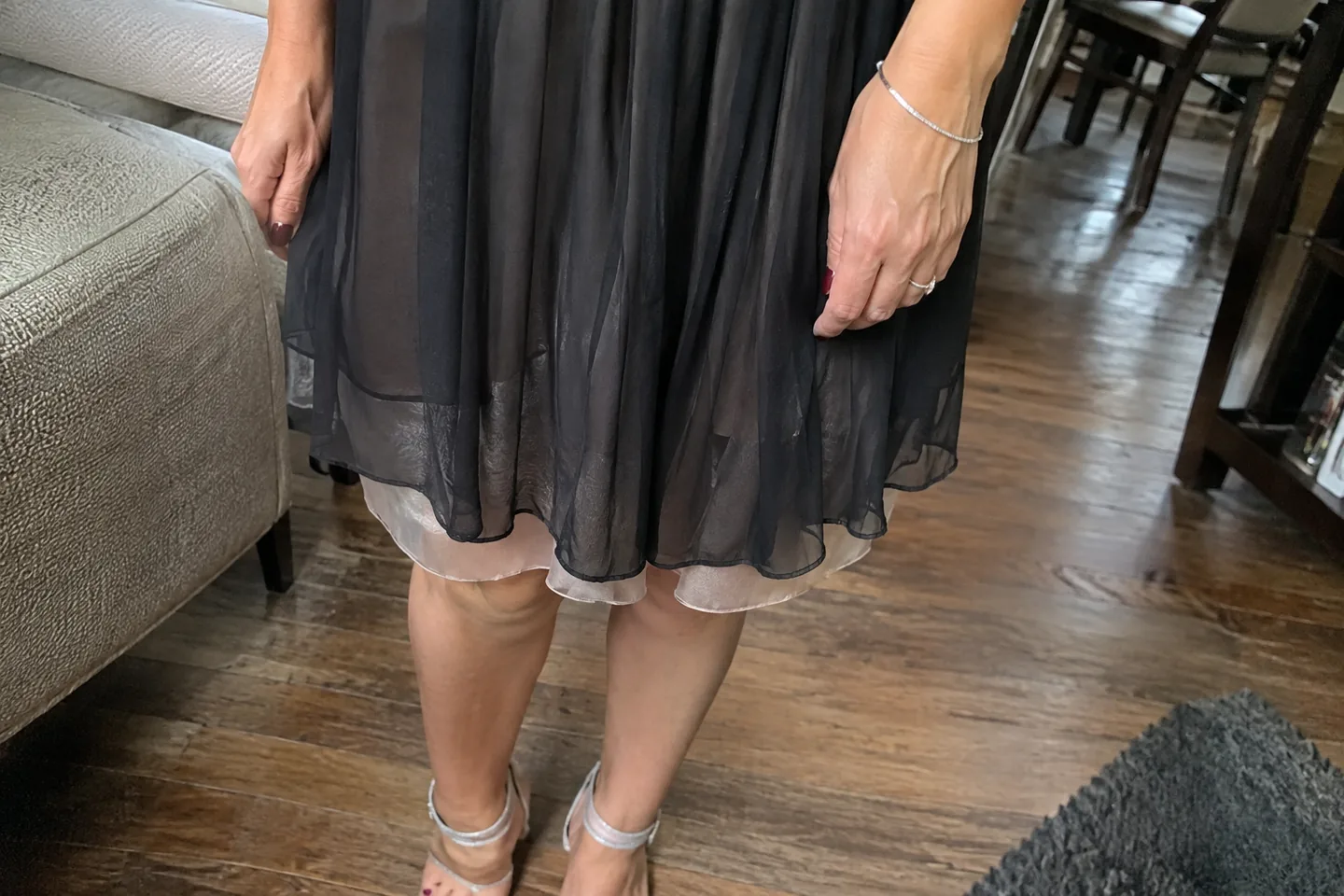
Dress lining showing below the hem? Check both layers
Identify the layer below your dress hem, check normal movement and prepare a useful fitting request with two local aids and clear layer diagrams.
 Guides
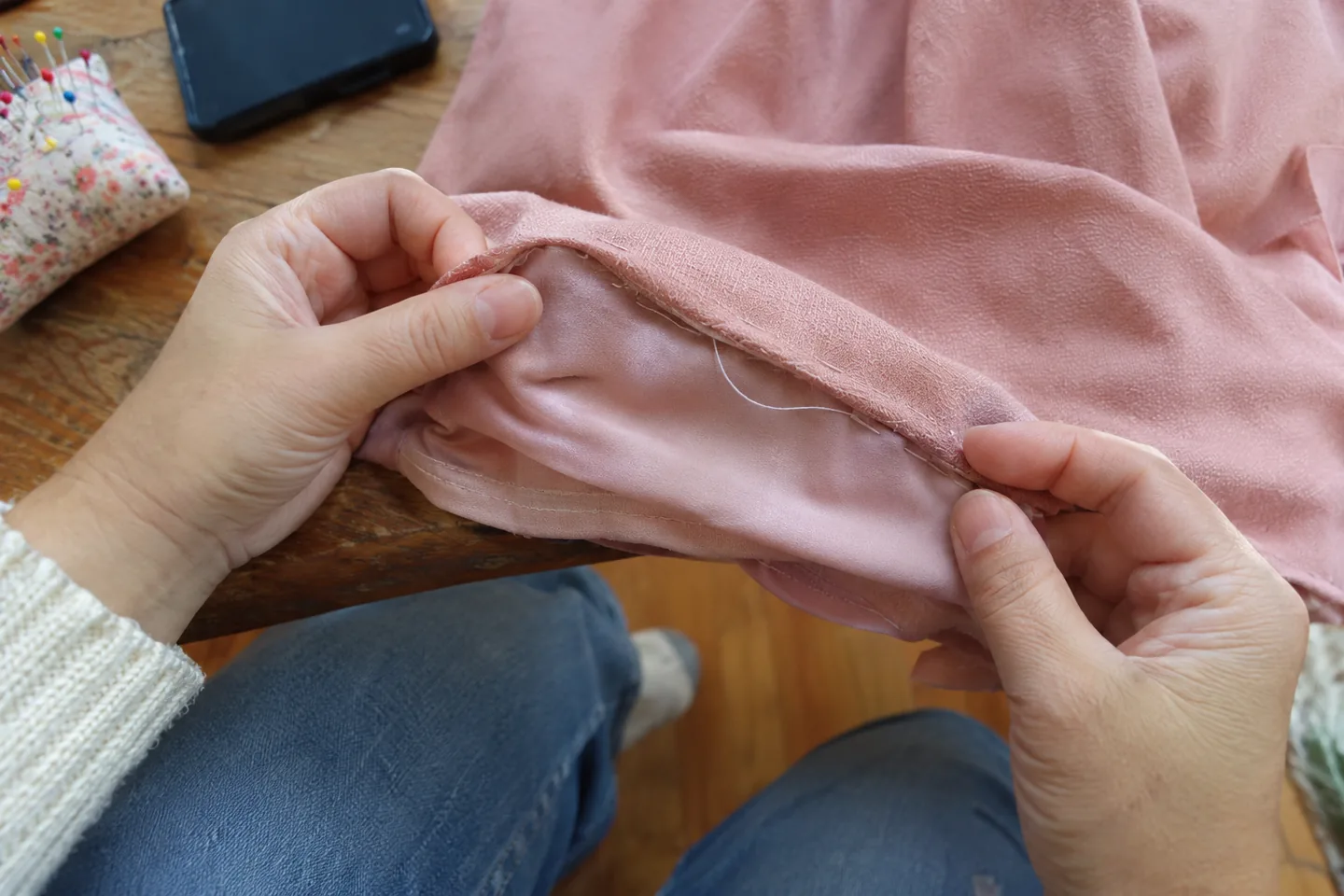
Strings connecting your dress lining? Check the thread chains
Identify thread chains inside a lined dress, check what their two ends join and prepare a clear repair question with two practical local aids.
 Guides
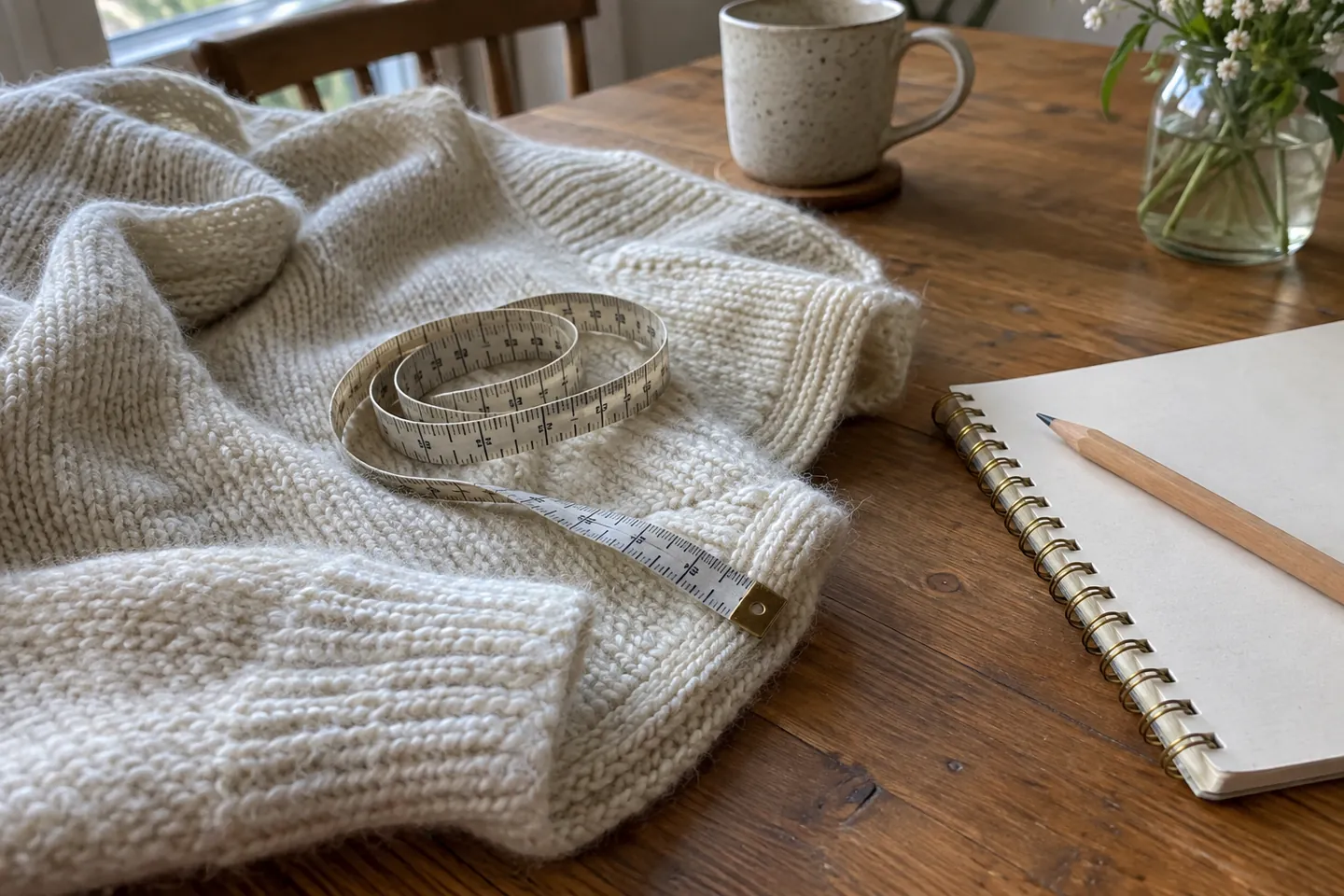
How to Measure Yourself for Dresses and Jumpsuits
Measure bust, waist, hip and length correctly, then use the size calculator to find the size range to start with for dresses and jumpsuits.