Guides
Dress waist stay: what the internal band does
A waist stay is an internal band that helps anchor a dress at the waist. It can have its own fastening, separate from the outer closure. Identify its attachments and follow the maker’s dressing instructions. A stay is different from a hanger loop or lining link; unknown construction needs an assessment before alteration.
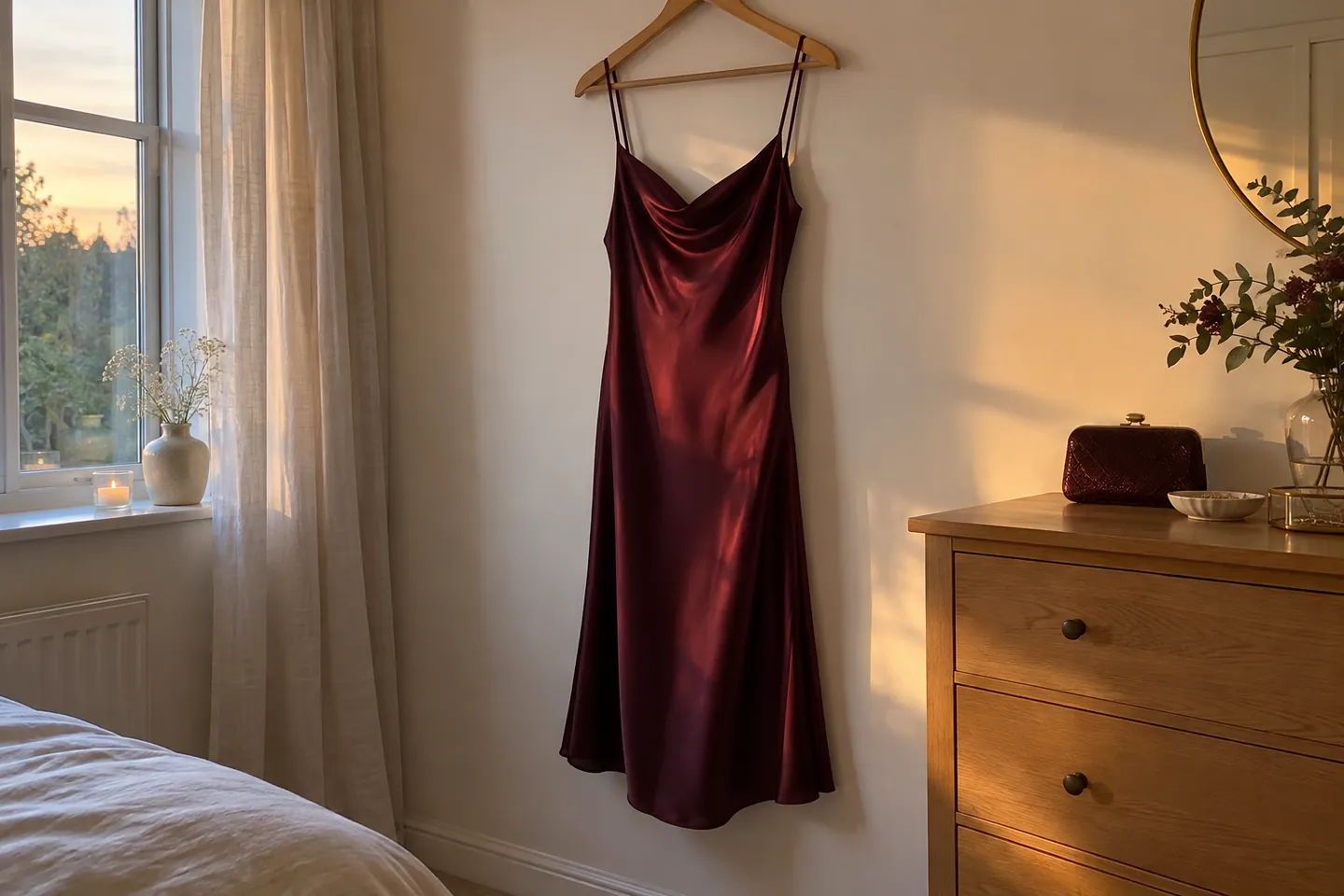
Identify the internal band before changing it
A waist stay is an internal band used to help anchor a garment at the waist. In some dresses it has its own fastening, separate from the outer closure. Look at its position and attachments rather than assuming every ribbon inside a dress has that job. Our hanger-loop guide covers ribbons intended for storage; those are a different question.
Support arrangements vary with the actual dress. A photograph of one couture gown cannot specify the length, placement or attachment for another. Keep an unfamiliar band intact until its function is clear. A short observation and a picture of the attachment are more useful than cutting something that seems unnecessary.
| What you can observe | Question to resolve |
|---|---|
| A band follows the inside waist | Is this the intended waist support? |
| The band has its own hook or other fastening | How should it be fastened on this dress? |
| A ribbon forms a loop near the upper edge | Is it intended for hanging instead? |
| A thread link connects lining and outer fabric | Is it a lining attachment rather than a waist band? |
What does the construction aim to do?
Dressmaker Brooks Ann Camper documents a waist stay fitted to a specific bridal dress. Her account describes anchoring the garment and reducing strain on its closures. It also shows that attachment choices followed the dress's design. Treat those details as an explanation of that construction, not universal sewing instructions for your own gown.
Rachel's Custom Sewing describes an internal ribbon support around the waist. The useful distinction is between support inside the dress and the outer fabric's appearance. A stay does not automatically correct a neckline, a tight bodice or a waist seam that sits somewhere you do not want it.
Inspect it with the dress supported
Lay the dress on a suitable clean surface or support it as its maker directs. Locate the band without hanging the garment's weight from an unknown ribbon. Note where it is attached, whether it has a separate closure and whether stitching or surrounding cloth looks damaged. Do not pull against a loose attachment to test its strength.
If you are trying on the dress, follow the maker's dressing instructions and ask how the inner support relates to the outer closure. Stop if a fastening needs force or causes discomfort. Our zipper check addresses caught cloth separately; pulling harder on a zipper is not a way to resolve an unfamiliar internal band.
Choose the next question
The maker has identified it as a waist stay
Ask for the intended fastening sequence and placement. Check comfortable sitting and ordinary movement during the fitting without forcing either closure.
The band feels uncomfortable or its attachment is loose
Show the dress to its maker or a garment specialist before changing the band. Record the specific location and when the discomfort occurs.
I cannot distinguish the band from a loop or lining link
Photograph its location, both ends and any fastening with the garment supported. Keep the construction intact while asking for identification.
Keep support and outer fit as separate checks
For a fictional fitting example, imagine a dress whose inner band closes comfortably while the outer waist seam sits higher than the wearer prefers. The support check and the seam-position check have different results. Tightening the band is not evidence that the seam will move to the desired position. Use the waist-seam guide to describe that second concern without choosing an alteration from one view.
Wear the intended underlayers and bring the shoes and outfit details relevant to the fitting. Compare the same resting posture before and after sitting. Tell the fitter what feels different rather than rearranging the garment repeatedly for a better-looking photograph. Our dress measurement guide helps keep body measurements separate from the garment's seams and support.
Before removing, adding or replacing a stay
Ask what the existing construction supports, which attachments would change and how the proposed work affects the outer closure or lining. Obtain an assessment of this garment instead of assuming every dress needs a stay or every uncomfortable band can be removed. A support feature is useful only as part of a dress that works for its wearer.
For a secondhand purchase, request clear interior photographs and ask whether the support has been altered. Unknown construction history stays unknown. Check the seller's actual return conditions and leave enough time for a fitting before an event. No band length or generic alteration price can replace that garment-specific decision.
Keep reading
GuidesDress zipper stuck in fabric: what to check before pulling
Identify a caught lining, strain or a damaged dress zipper. Use two local decision aids, clear stop points and an observation note for a repair professional.
GuidesDress waist seam too high: design or fit?
Separate an intended raised waist from a fit concern. Compare the right bodice measurements, use two decision aids and prepare a clear fitting note.
 Guides
How to Measure Yourself for Dresses and Jumpsuits
Measure bust, waist, hip and length correctly, then use the size calculator to find the size range to start with for dresses and jumpsuits.