Guides
Dress hem tape: a reversible hold or a stitched hem?
Use dress hem tape only after a scrap test on the same fabric. Match the hold to your goal: a removable hold for one event, tape for a few wears, stitching for a lasting hem. Check the care label and any lining before you stick anything, and ask a dressmaker for delicate or lined dresses.
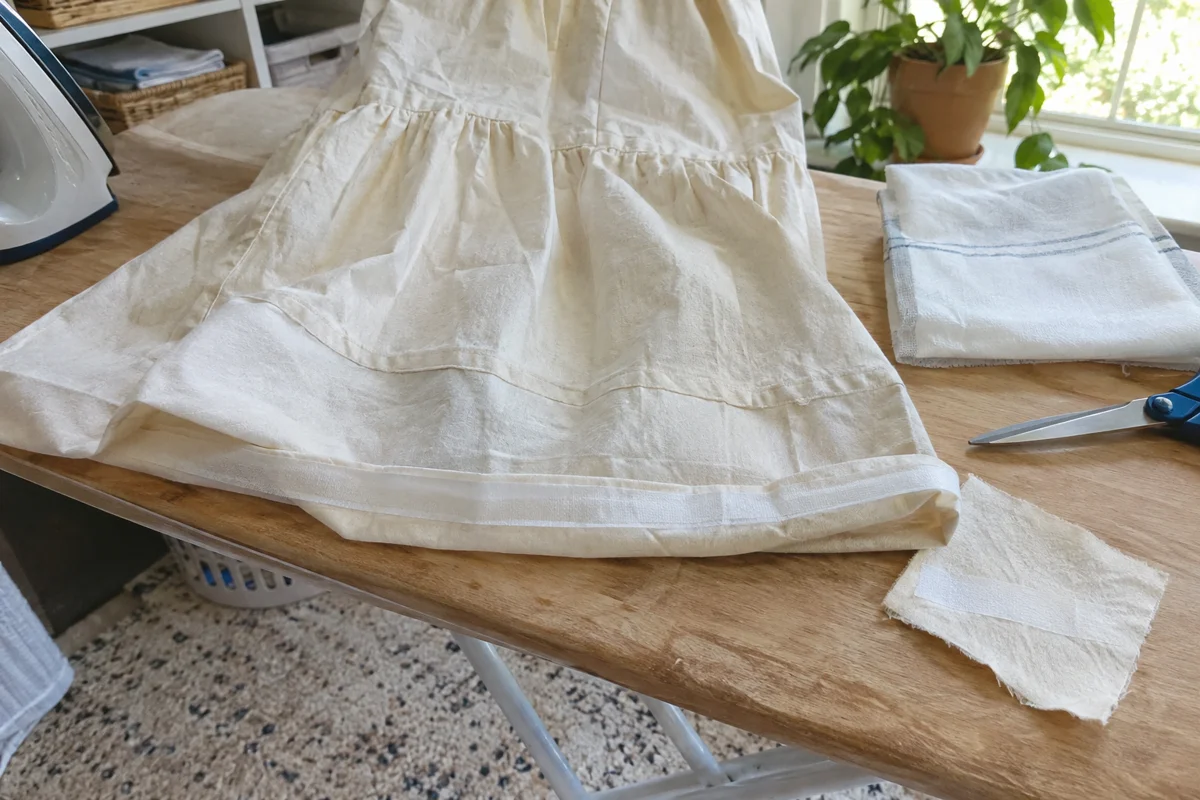
Is hem tape the right choice for this dress?
Hem tape is a quick, reversible-looking way to hold a hem, but whether it is the right choice depends on the fabric, the care label and how long you need the hem to last. Fusible tape bonds with heat and can leave a mark or a stiff line on delicate cloth. A removable or tape-only fix is better for a short-term hold than for a hem you plan to wear for years. Test it on a scrap before it touches the dress.
Which hem fix matches your goal?
| Goal | Start with | What to check first |
|---|---|---|
| One event, then undo | A removable hold, such as a few loose basting stitches | That the fold does not leave a crease line |
| A few wears, same fabric | Tape suited to the fabric weight | That the tape's instructions match your care label |
| A long-term hem | Hand or machine stitching by a dressmaker | That the cloth has enough allowance to fold |
| Delicate or sheer cloth | A small hand-stitched hem | That no adhesive shows through |
These are starting points. None of them proves that a particular tape will work on your dress.
How do you run a test on a scrap?
Use a leftover piece cut from a seam allowance, a hidden facing or a spare fabric swatch if the dress came with one. If you have none, ask the seller before you cut anything from the garment. Fold a small hem into the scrap, apply the tape exactly as its package says, and let it cool before you handle it.
- Check the edge in daylight. Look for a shadow line, a shine or a stiff ridge through the cloth.
- Tug gently on the fold from both sides. Note whether it holds or lifts.
- Wash or clean the scrap only as the care label of the dress allows, then check again.
- Pull the tape off the scrap and note whether it leaves residue or damages the fibers.
Record what happens to each step. If the tape leaves a mark on the scrap, it will leave one on the dress.
What should you check on the dress itself?
Look at the existing hem before you add anything. A lined dress may have a lining that must stay shorter than the outer layer, and tape that joins the two can pull the outer skirt upward. A horsehair braid edge or a weighted hem has its own construction and is best left to a dressmaker. See the notes on horsehair braid hems and on lining that shows below the hem before you stick anything across the layers.
Measure the length you want from a fixed point with the shoes you will wear, using the dress measurement notes, then pin the new fold and compare it standing and walking. Put the tape in only after the pinned hem looks right.
When should a dressmaker take over?
Stop and ask when the fabric is silk, satin, velvet, sheer or heavily textured, when the hem has a lining, braid or weight, or when the dress is valuable to you. Take your test notes and a photograph of the inside of the hem. Ask whether the existing allowance is deep enough and whether a stitched hem would survive the care label better than an adhesive.
A short note to keep
Write down the fabric, the tape used, the test result and the date. If the hold fails after a wash, you will know whether the tape, the fabric or the method was the cause, instead of changing everything at once. The princess seams guide explains why a dress shaped with long seams is harder to re-hem than a simple shift.
Frequently asked questions
Can hem tape damage a dress?
It can leave marks or residue on some fabrics. Test it on a scrap cut from the same cloth and follow the care label.
Is hem tape permanent?
It depends on the product and the washing. Treat it as a short-term hold unless the package and your test show otherwise.
Can I use hem tape on a lined dress?
Be careful. A lining that is joined to the outer layer by tape can pull the outer skirt. Check how the layers are attached first.
What is a safer alternative to tape?
A few removable basting stitches for a single wear, or a stitched hem by a dressmaker for a lasting result.
Keep reading
 Guides
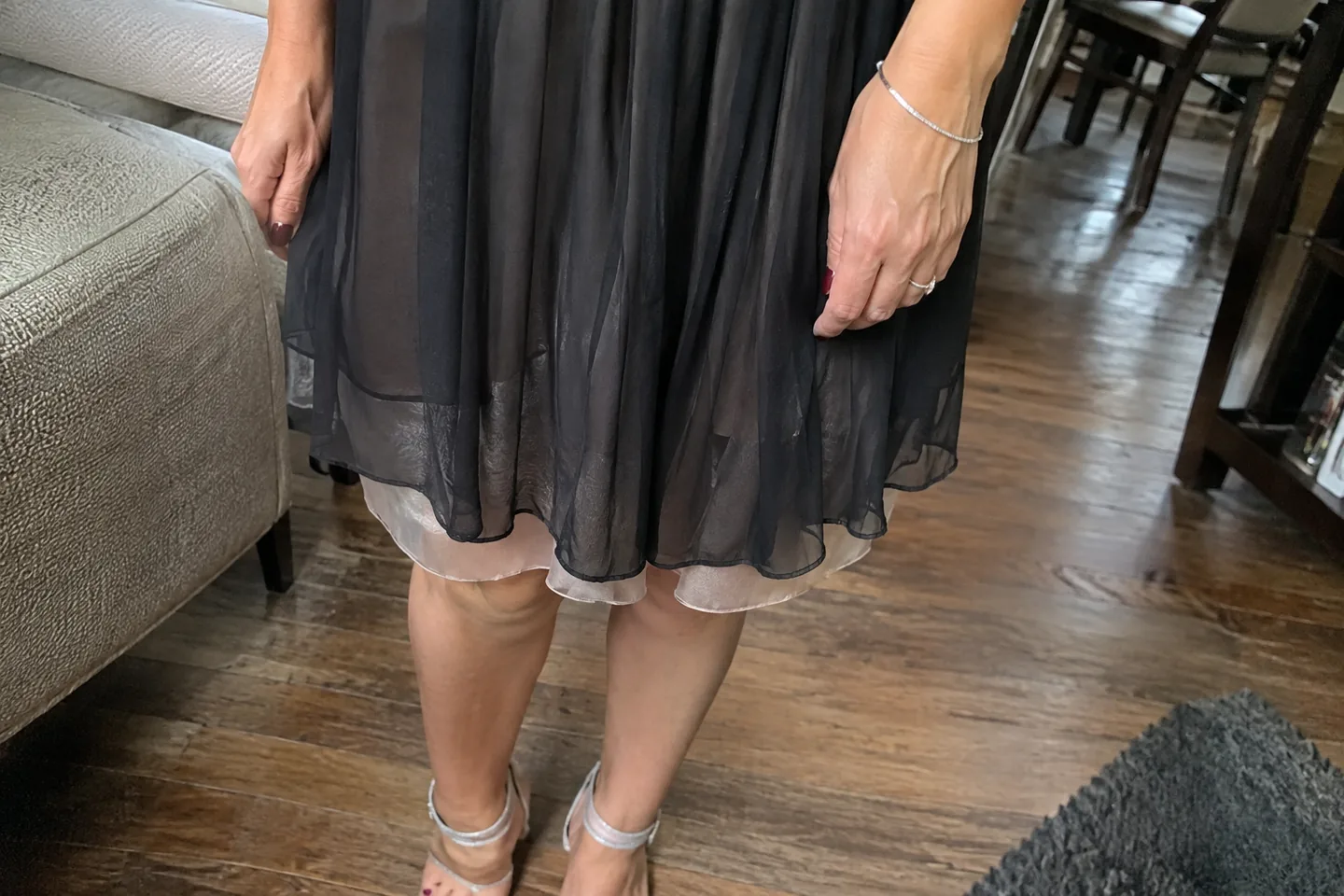
Dress lining showing below the hem? Check both layers
Identify the layer below your dress hem, check normal movement and prepare a useful fitting request with two local aids and clear layer diagrams.
 Guides
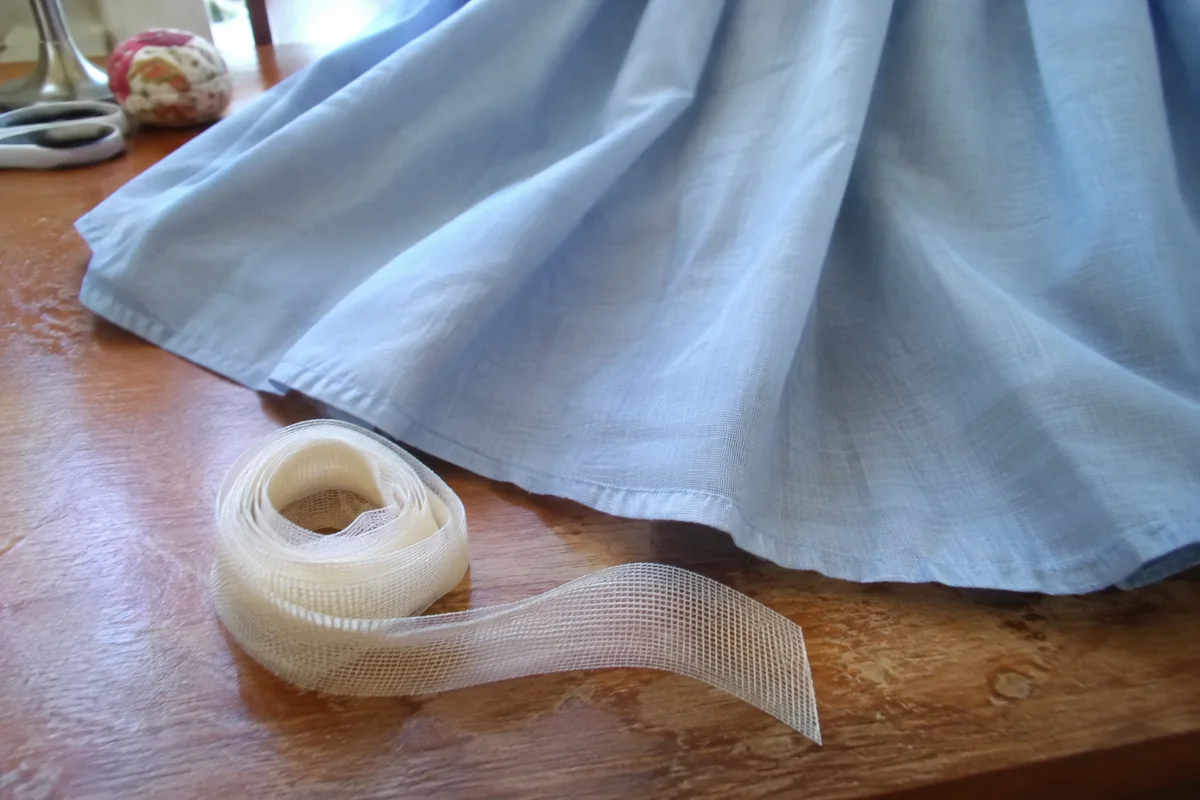
Horsehair braid in a dress hem: what the mesh does
Identify horsehair braid at a dress hem, separate support from lining and length concerns, and prepare a clear garment-specific question before alterations.
 Guides
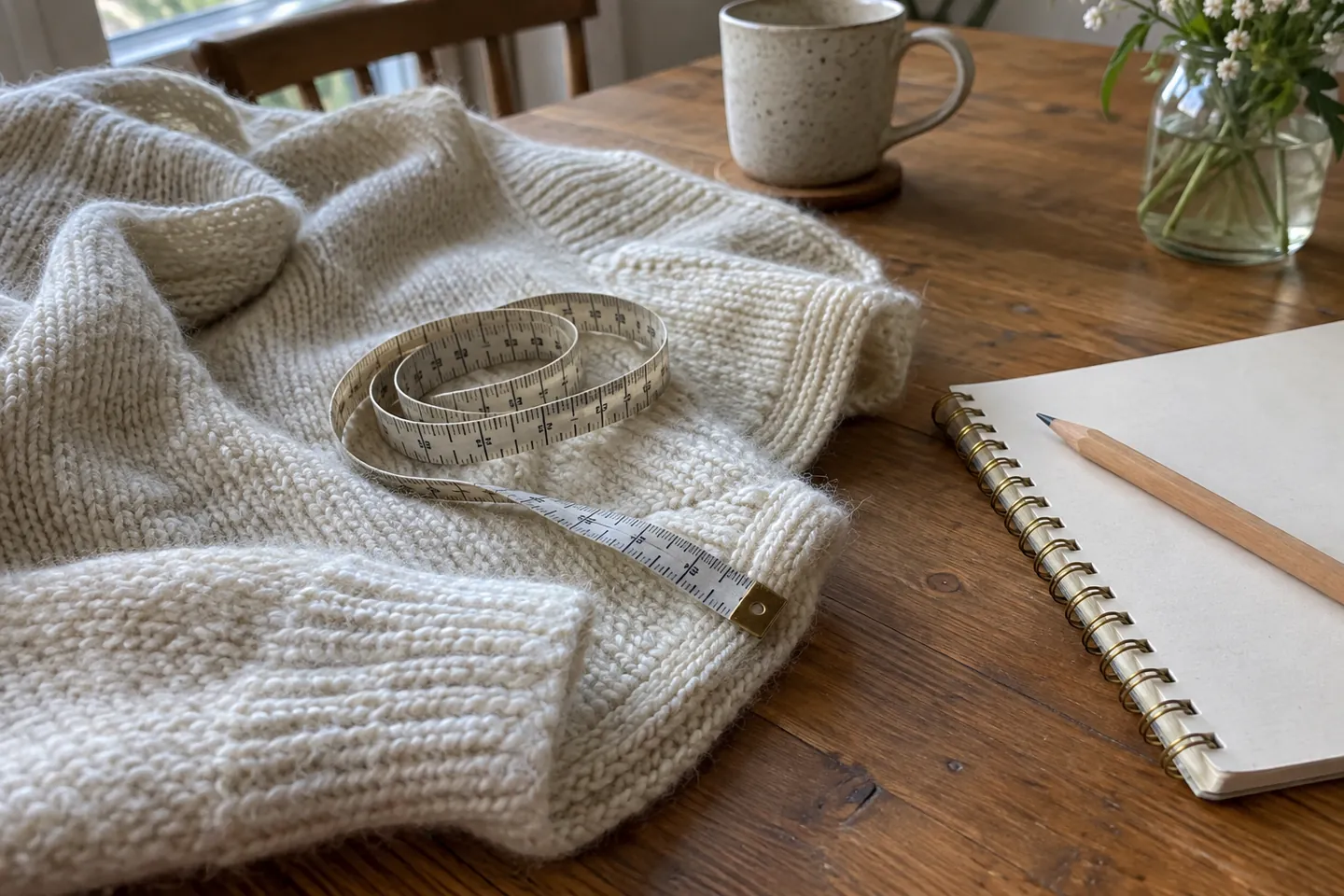
How to Measure Yourself for Dresses and Jumpsuits
Measure bust, waist, hip and length correctly, then use the size calculator to find the size range to start with for dresses and jumpsuits.