Guides
Understitching and topstitching in a finished dress
Understitching holds seam allowances toward an inner facing or lining and normally stays hidden inside the dress. Topstitching is visible on the outside and can secure or decorate an area. Compare the actual layers and location; a rolling edge alone does not establish which stitching is missing or which repair is needed.
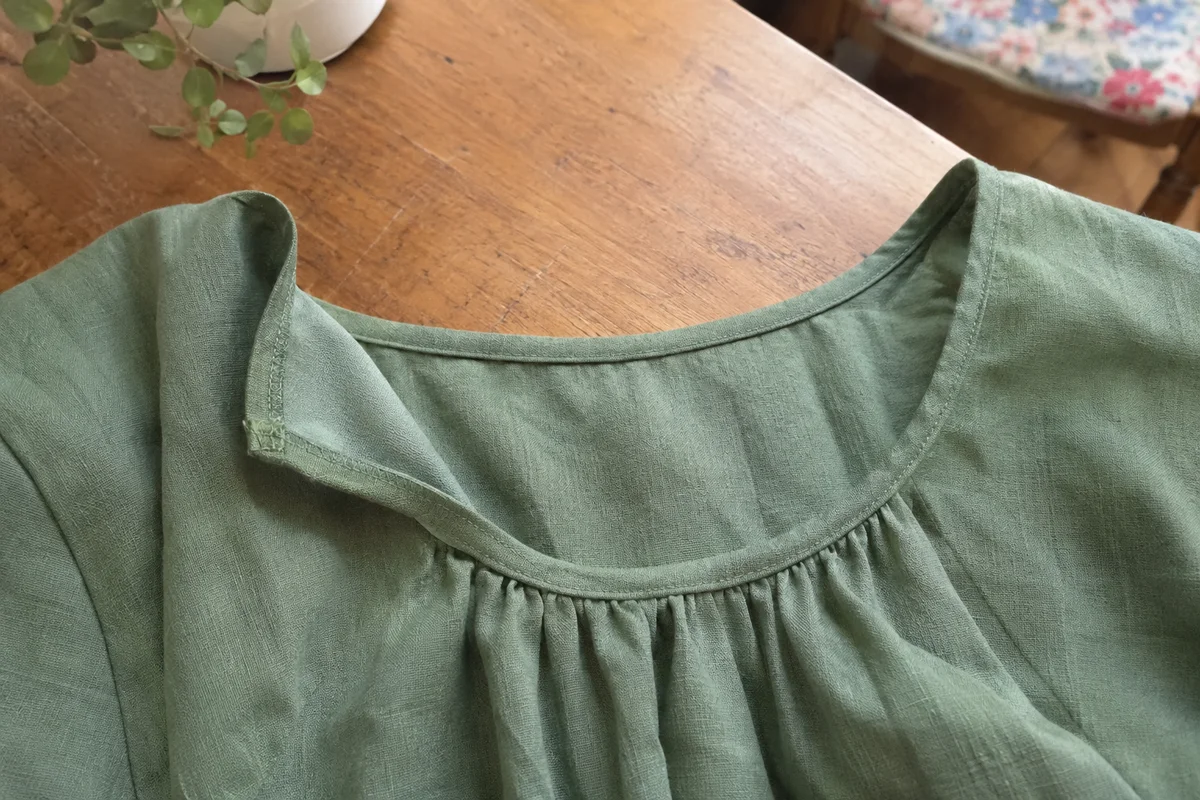
Which stitching is meant to be seen?
Understitching secures the seam allowances to an inner facing or lining near an edge. It normally stays inside the finished dress. Topstitching is visible from the outside and may contribute to the design as well as securing layers. The names describe different construction choices, not two grades of sewing quality.
For a finished garment, begin with the outside view and then inspect an accessible inside edge gently. Do not open a seam to identify a stitch. If the dress is fully lined and the relevant layers cannot be seen, leave the construction unconfirmed. The dress fitting and measurement guide supplies a separate record when the concern is fit rather than stitch identification.
What does understitching hold together?
At a faced edge, the visible garment and facing are first joined at their seam. Understitching then holds the seam allowances toward the inner layer, helping the edge settle inward. It does not normally run through the outer face of the dress as a visible finishing line. A lining can play the inner-layer role in suitable construction.
The Sewing & Craft Alliance guide describes this layer relationship and the use of understitching at faced openings. Its construction instructions explain the technique; they are not a reason to cut into a finished dress whose internal allowances you have not inspected.
| Feature | Understitching | Topstitching |
|---|---|---|
| Usual visible side | Inside facing or lining | Outside garment surface |
| Typical purpose | Help an inner edge stay inside | Secure or visibly finish an area |
| What to check | Accessible inner layer and edge | Visible line and its location |
| What the name cannot prove | Why a facing currently rolls out | That hidden understitching is absent |
Can a dress contain both techniques?
Yes. They can serve different jobs in the same garment. A visible line near a neckline does not reveal every layer underneath it, and hidden stitching elsewhere does not remove the possibility of decorative surface stitching. Describe the part you actually inspected rather than assigning one label to the entire dress.
Seamwork's understitching tutorial shows the inner-edge technique and notes that corners can limit access. That is a useful reminder when an inside line does not appear to continue around every turn. A partial view alone does not establish a construction defect.
How can you make a useful observation without unpicking?
Use a three-view note: outside edge at rest, accessible inside edge, and the same area after ordinary wear movement. Keep the dress supported and follow its care label. Avoid pulling the facing outward to reveal more than it naturally allows. A photograph can document the visible line without proving how inaccessible layers were assembled.
In a fictional note, the neckline has no visible surface stitching, a short matching line is visible on the facing, and one section still turns outward after sitting. Those are three observations. They do not prove that adding more stitches is the right repair. Our facing-roll guide helps describe the actual symptom before a dressmaker evaluates it.
Does a rolling facing always mean understitching is missing?
No conclusion follows from that symptom alone. Fabric, pressing, construction and wear can affect how an edge behaves. The useful next question is what a competent repair assessment finds in this garment. Do not stitch through all layers as a quick substitute: that may create an outside line you did not want and may not address the concern.
If the area is near a zip, separate the facing edge from the lining attachment and zipper tape. The lining-to-zipper comparison identifies that different relationship. If the concern is a skirt hem, an internal shaping strip belongs to another construction discussion; see the horsehair-braid hem guide.
What should you ask before authorizing a repair?
Describe where the edge changes, whether the line is visible inside or outside, and what happens during ordinary movement. Ask which layers the proposed stitching would catch and whether it would show on the dress face. Request a garment-specific explanation before agreeing to work. This conversation is more precise than asking for topstitching when you really want an invisible edge treatment.
I can see a row inside the neckline
Record its position on the accessible inner layer. Do not assume it passes through the dress face; compare the outside view separately.
I can see a row outside the dress
Record that visible finishing line and ask about its role. It does not tell you whether hidden understitching also exists.
The lining hides the construction
Keep the method unconfirmed and describe the behavior of the edge. Do not open seams merely to identify a stitch.
Keep reading
 Guides
How to Measure Yourself for Dresses and Jumpsuits
Measure bust, waist, hip and length correctly, then use the size calculator to find the size range to start with for dresses and jumpsuits.
 Guides
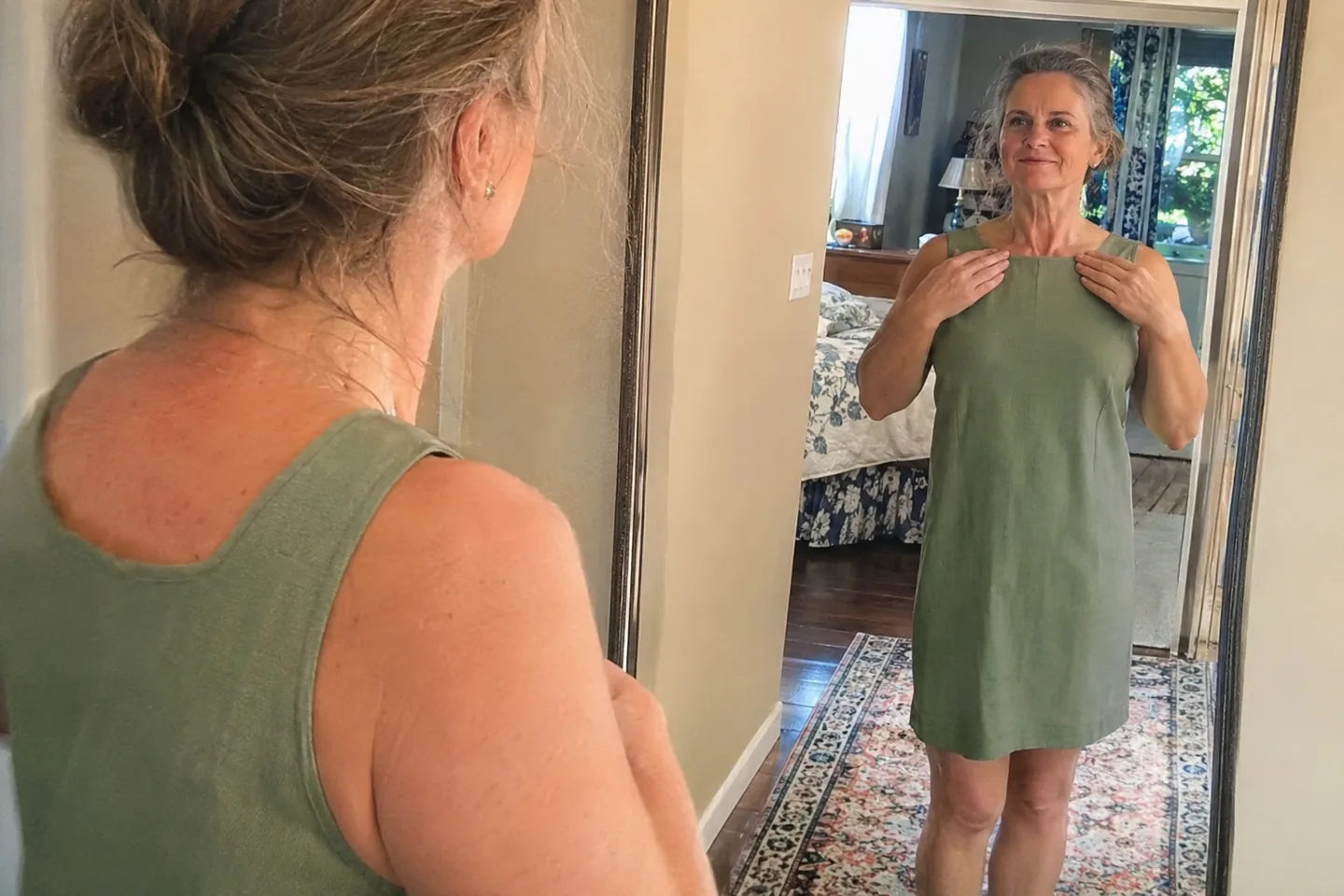
Dress facing flipping out: check the neckline finish
Identify a neckline facing that rolls outside a dress, understand what understitching joins, and record the concern before choosing a garment-specific repair.
 Guides
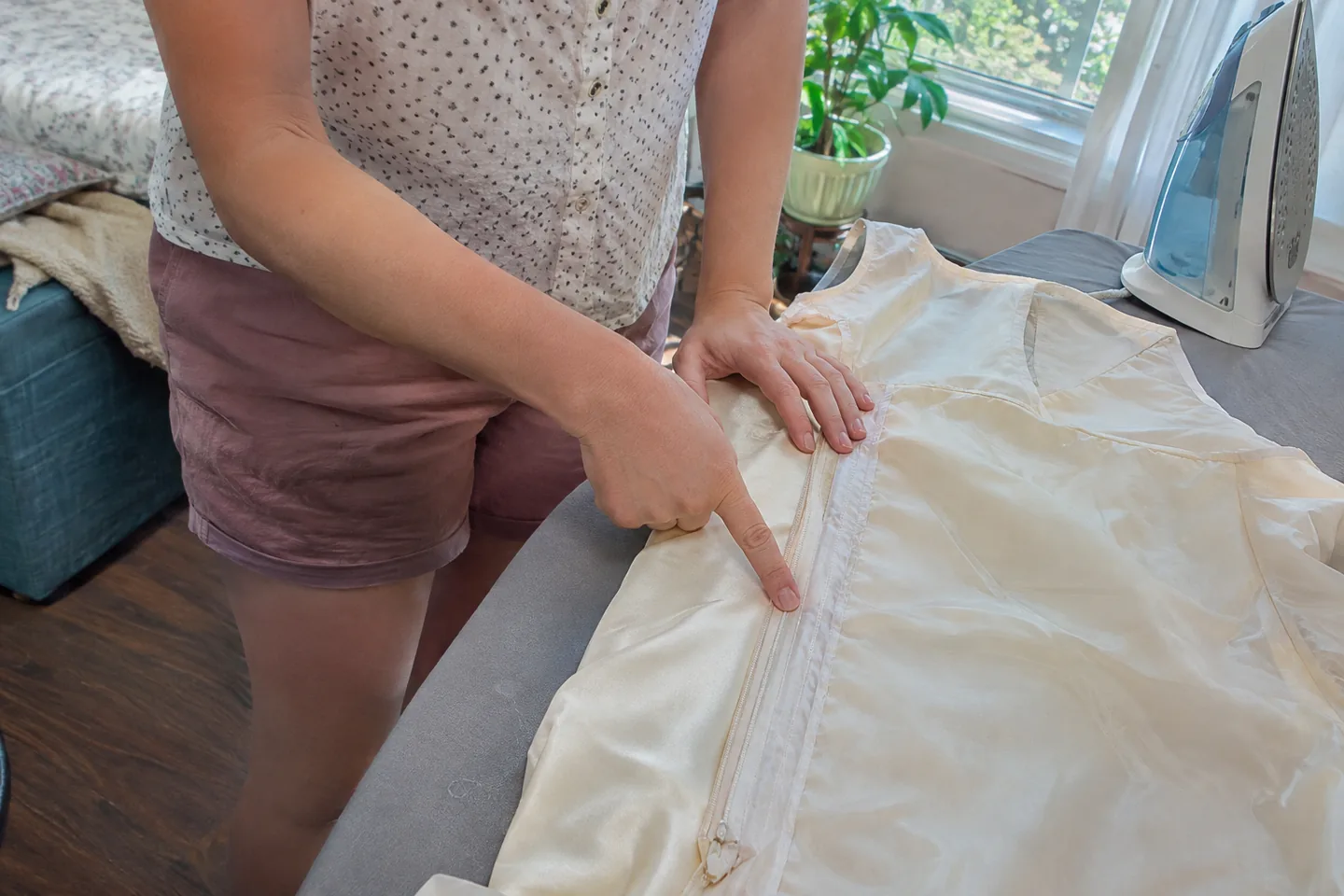
Dress lining attached to a zipper: what the stitches join
Identify a dress lining sewn to zipper tape, separate an intentional attachment from caught fabric, and prepare a clear question before changing the construction.