Guides
How to assess a wavy zipper on a finished dress
To fix a wavy zipper on a dress, first compare the seam flat and worn, and check whether the slider moves freely. Record where the ripple begins and what changes with movement. Sewing distortion, fit and attached layers need different assessments; avoid heat or seam cutting before the actual garment is inspected.
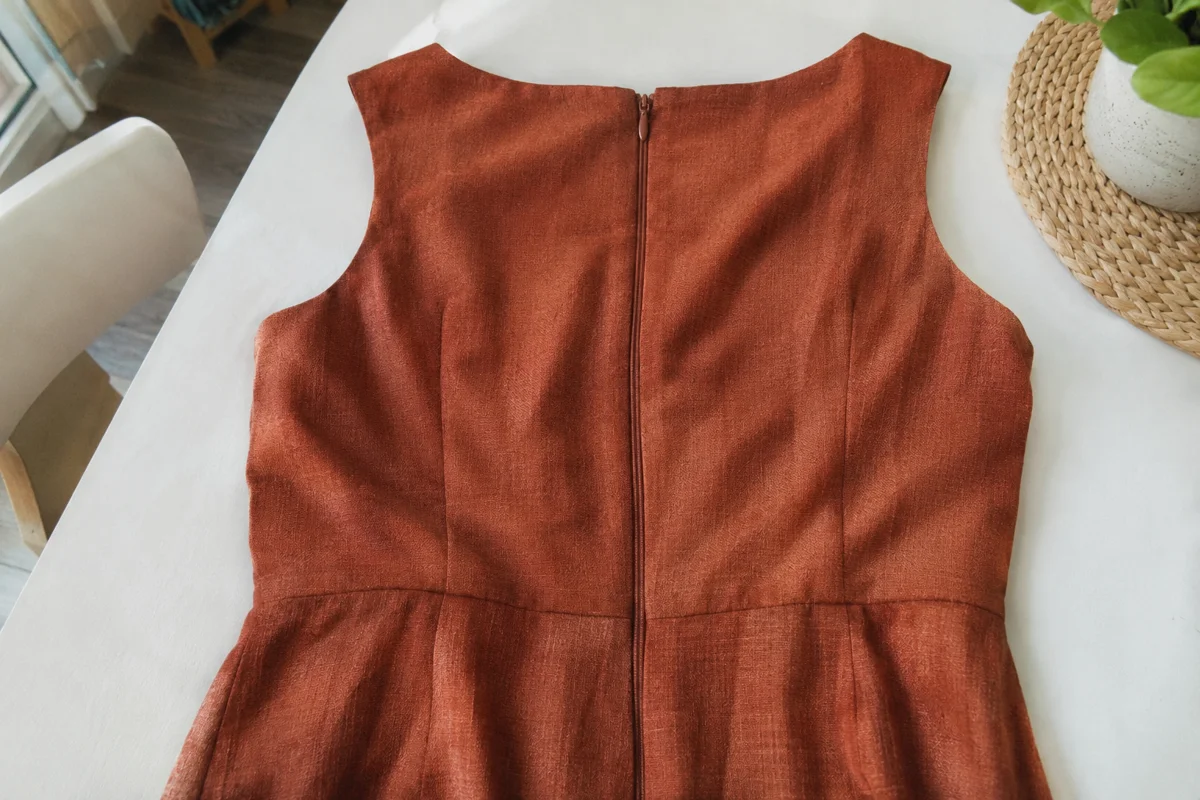
What should you do with a wavy dress zipper?
First take the dress off and support it on a flat surface. Do not try to flatten the ripple by pulling the zipper tape or pressing it with a hot iron. Open and close the zip gently only if it moves freely, then compare the fabric beside it with the dress worn naturally. A wavy outline and a slider that catches are separate problems.
A new dress that arrives with an unwanted ripple deserves a conversation with the seller before any alteration. Photograph its condition, keep the care label and ask about the available remedy. Cutting stitches can change both the garment and the evidence you need to explain the concern.
Is the ripple present flat, worn, or both?
Lay the back of the dress on a clean surface without stretching it. Note where the waves begin and end: the whole opening, one side, the waist seam or the bottom of the zip. Photograph it in ordinary light. Avoid pushing the cloth into a deliberately smooth arrangement just for the picture.
Then try the dress with the intended undergarment and let it settle. Record whether the zipper lies differently when you stand, sit and return to rest. Stop if the closure strains. The dress measurement guide helps you keep garment dimensions separate from the observations you make on the wearer.
| Observation | Useful next check | What it does not prove |
|---|---|---|
| Waves remain with the dress flat | Show both sides of the seam to a repairer | That buying another slider will flatten it |
| Ripples change substantially when worn | Assess local fit and the underlying layers | That the whole dress is one size too large |
| A bump starts near the zip end | Photograph the transition into the regular seam | That shortening the zipper is the answer |
| The slider catches fabric | Stop pulling and inspect the obstruction | That the catching and waviness share one cause |
Why can the seam ripple even when the zipper works?
A working zipper can still sit beside puckered fabric. In sewing, different layers can feed or relax differently, and the surrounding material may be less stable than the tape. These are possibilities to investigate, rather than a diagnosis that can be made from the outside of every finished dress.
Coats' seam-puckering bulletin describes several contributors, including tension and feeding. Its manufacturing tests involve controlled examination of a seam. For an owner, the useful lesson is that one visible symptom can have several causes; cutting a few stitches in a favorite dress is not a neutral inspection.
Seamwork's invisible-zipper troubleshooting guide discusses stabilizing lightweight fabric during construction. That helps explain a conversation about reinserting a zip. It does not make adding fusible interfacing to a completed, lined garment a universal home repair.
Check the lining without cutting its attachments
Open the dress and look at where the lining meets the zipper. Is an edge caught in the slider path? Does the lining pull while the outer fabric remains relatively relaxed? Photograph the relationship without detaching it. Our lining and zipper construction guide identifies the layers to show a fitter.
For a jam, use the separate caught-fabric assessment. Do not force the slider to test a visual ripple. Coats' invisible-zip guidance shows that stitching placement can affect operation. A repairer may need to inspect insertion as well as the hardware.
Prepare a bounded repair request
Give the repairer four observations: the location of the wave, its appearance flat, its appearance worn and whether the zip operates freely. Add when you first noticed it and any real care or alteration history. If you do not know how a secondhand dress was washed, write unknown rather than inventing a before-care condition.
For example, an illustrative note might read: three shallow waves beside the left tape while flat; similar when standing; slider moves freely; no known alteration. A different note might describe a single bump below the waist seam that appears only when seated. Those records suggest different inspection priorities without prescribing an unsupported fix.
Ask whether the quote covers resetting the existing zipper, replacing it, addressing the seam beneath it or adjusting another layer. Ask how opening the seam could affect delicate fabric or old needle marks. Confirm the expected result and any limits before work begins; a repair quote is more useful than a generic promise that all waves can be steamed away.
What should you check after the work?
Try the dress with the same undergarment and repeat the same standing and seated checks. Compare the repaired area in similar light, then test the zipper gently with the fabric kept clear. A smoother seam should still allow comfortable movement. Check the waist seam and lining as well as the outer outline before collecting the dress.
If you are sewing a new dress, work from the pattern and zipper maker's instructions and test the fabric, support and stitch setup on a sample first. If the dress is already finished and valuable to you, keep the initial observation non-destructive and have the garment assessed before choosing which seam to open.
Keep reading
 Guides
How to Measure Yourself for Dresses and Jumpsuits
Measure bust, waist, hip and length correctly, then use the size calculator to find the size range to start with for dresses and jumpsuits.
 Guides
Dress zipper stuck in fabric: what to check before pulling
Identify a caught lining, strain or a damaged dress zipper. Use two local decision aids, clear stop points and an observation note for a repair professional.
 Guides
Dress waist seam too high: design or fit?
Separate an intended raised waist from a fit concern. Compare the right bodice measurements, use two decision aids and prepare a clear fitting note.